
The most common question we hear at Bespoke when patients start exploring GLP-1 weight loss in Gainesville is simple: should I be on semaglutide or tirzepatide? Both medications have transformed what is possible in medical weight loss, and both have legitimate cases for use. Here is how we answer that question at our Gainesville clinic, with physician judgment, real lab data, and a personalized care plan, not a one-size-fits-all script.
What to Know
- Semaglutide and tirzepatide are both GLP-1 receptor agonists, once-weekly injections that suppress appetite, stabilize blood sugar, and support weight loss.
- Tirzepatide also activates GIP receptors (a second hormone pathway), which translates to greater average weight loss in head-to-head clinical comparison.
- In the STEP trials, semaglutide produced about 15% body-weight reduction at 68 weeks. In the SURMOUNT trials, tirzepatide produced about 20% at 72 weeks at the highest dose.
- Side-effect profiles are similar but not identical. Cost, insurance coverage, and prior medication history all matter.
- At Bespoke, the choice between them is a physician decision made after labs, history, and goal review, not a marketing-driven default.
The Short Answer
If you have never used a GLP-1 before, are starting from a moderate BMI, and want the option with the longest real-world track record, semaglutide is often the starting point. If you have used semaglutide before with a plateau or limited response, are starting from a higher BMI, or want the medication with the greatest demonstrated weight-loss percentage in clinical trials, tirzepatide tends to be the stronger fit.
But neither answer applies cleanly without seeing your lab work, hearing your history, and understanding what you are trying to achieve. That conversation is the first step.
How They Work, Same Family, Different Reach
Both medications are GLP-1 receptor agonists. They mimic glucagon-like peptide-1, a gut hormone that controls appetite, slows gastric emptying, and improves how your body uses insulin. Those effects, along with eating and drinking less, help explain the quieter appetite and weight loss patients describe.
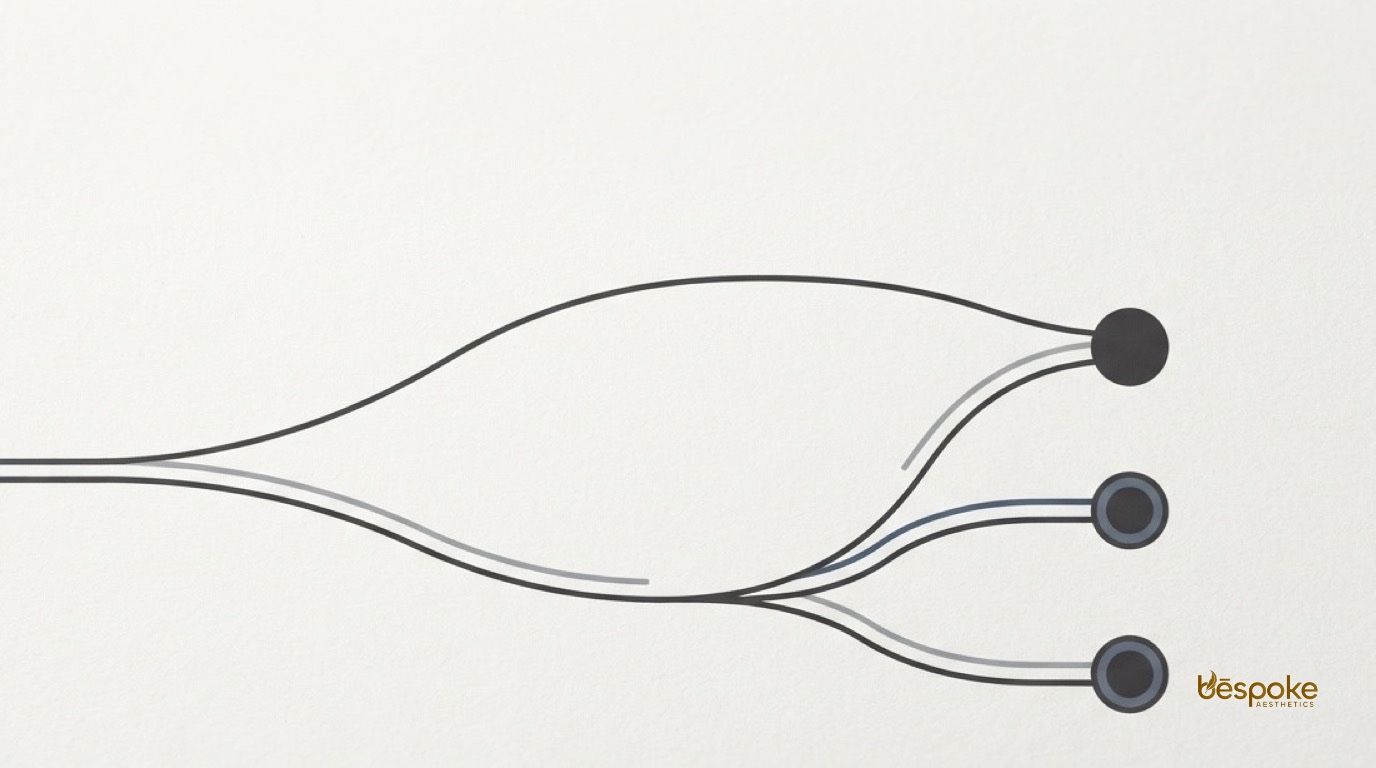
Semaglutide targets one receptor pathway, GLP-1.
Tirzepatide targets two, GLP-1 and GIP (glucose-dependent insulinotropic polypeptide). The addition of GIP appears to amplify insulin response and improve fat metabolism, and in clinical trials it has translated to greater average weight loss than GLP-1 alone.
That dual action is the single biggest mechanistic difference between the two medications, and it is the reason tirzepatide often shows the larger percentage in head-to-head comparisons.
Weight Loss Results: STEP vs. SURMOUNT
The two most-cited clinical trial programs in the GLP-1 weight loss space are STEP (semaglutide) and SURMOUNT (tirzepatide).
- STEP-1 (semaglutide, 2021): Adults without type 2 diabetes, 68 weeks. Average weight loss in the semaglutide arm was approximately 14.9% of starting body weight, compared to about 2.4% on placebo.
- SURMOUNT-1 (tirzepatide, 2022): Adults without type 2 diabetes, 72 weeks. At the highest 15 mg dose, average weight loss reached approximately 20.9% of starting body weight, compared to about 3.1% on placebo.
- SURMOUNT-5 (head-to-head, 2024): Direct comparison published in NEJM showed tirzepatide producing greater average weight loss than semaglutide at 72 weeks across multiple patient profiles.
The clinical signal is consistent: tirzepatide produces a larger average reduction, especially at the higher doses. But “average” is the operative word. Individual response is shaped by genetics, baseline metabolic health, eating and movement habits, and how the dose is titrated.
Side Effects: Similar, Not Identical
Both medications share the same family of gastrointestinal side effects, nausea, constipation, occasional reflux, sometimes diarrhea, most pronounced during the first weeks of each dose increase and often easing as your body adapts.
Differences our patients tend to report:
- Semaglutide: Slightly higher rate of early-titration nausea for some patients. Most resolves within 2 to 3 weeks of a given dose.
- Tirzepatide: Tends to be tolerated better at higher doses in our experience, particularly the appetite-suppression intensity. Some patients describe a smoother titration curve.
Rare but serious side effects, pancreatitis, gallbladder issues, severe dehydration, exist with both medications. Severe or persistent belly pain (with or without vomiting, sometimes spreading to the back), repeated vomiting, or signs of dehydration need prompt medical evaluation, and emergency care when severe. This is why comprehensive lab testing and physician-led monthly check-ins are not optional at Bespoke.
Cost and Access in Gainesville
For most Gainesville-area patients, the cost conversation matters as much as the clinical one. Brand-name semaglutide (Wegovy) and brand-name tirzepatide (Zepbound) are both expensive and often not covered by commercial insurance for weight loss. Compounded versions are widely available and significantly less expensive. Compounded semaglutide and tirzepatide are not FDA-approved, which means the FDA does not review them for safety, effectiveness, or quality.
At Bespoke, GLP-1 therapy is priced transparently, and we accept Cherry financing for patients who prefer to spread the cost across monthly payments. Our membership program bundles a GLP-1 protocol with monthly B12 injections, scheduled lab pulls, and discounted IV nutrient therapy at a single rate, the most efficient way to do this long-term.

Who Tends to Do Better on Each
Semaglutide tends to be the strong fit for:
- First-time GLP-1 patients with a moderate BMI (27 to 32)
- Patients who want the medication with the most years of real-world data
- Patients with a strong existing eating pattern who need appetite assistance more than aggressive titration
- Patients who have responded well to semaglutide in the past and are restarting therapy
Tirzepatide tends to be the strong fit for:
- Patients with a higher BMI (32+) and ambitious weight-loss targets
- Patients who have plateaued on semaglutide and need a different mechanism
- Patients with metabolic markers that suggest insulin resistance, the GIP component may help here
- Patients who tolerate medication well and can move through titration efficiently
- See our tirzepatide service page for the full protocol
These are starting-point heuristics, not rules. The actual decision happens in the consultation, after Dr. Indianos reviews your labs and history.
The Bespoke Approach: Why We Don’t Default to One
A lot of Gainesville-area patients come to Bespoke after starting GLP-1 therapy somewhere that prescribed the same medication, at the same starting dose, on the same titration schedule, to every patient they see. That is the model that produces side-effect drop-off, plateau frustration, and the patients who give up at month three.
Our protocol is different by design:
- Initial consultation with Dr. Indianos, MD: a real conversation about your history, goals, and prior attempts.
- Comprehensive labs first: CBC, CMP, lipid panel, HbA1c, fasting insulin, thyroid panel, vitamin D. We need a real metabolic baseline before any prescription.
- Medication chosen after labs: semaglutide or tirzepatide is selected based on what your labs and history tell us, not a default.
- Personalized titration: start dose and escalation tied to your tolerance, not a one-size schedule.
- Monthly check-ins: every patient seen monthly during titration to adjust the plan in real time.
- Lean muscle protection: protein guidance and resistance training cues to help preserve muscle while you lose fat, plus B12 and IV nutrient support options when appropriate.
Frequently Asked Questions
Can I switch from semaglutide to tirzepatide?
Yes, and many of our Gainesville patients do, usually because they have plateaued at a certain dose of semaglutide or because their goal is more aggressive than semaglutide alone can support. The transition is handled with a structured taper and re-titration plan.
Are compounded versions safe?
Compounded semaglutide and tirzepatide are not FDA-approved, so the FDA does not review them for safety, effectiveness, or quality. Compounding is permitted only under specific federal and state conditions, and Bespoke works only with licensed pharmacies. Products from unverified online suppliers carry added risks, including dosing errors and unknown ingredients, and we strongly advise against them.
Will I regain the weight when I stop?
Regain can occur after GLP-1 treatment stops, with either medication, even with good planning. In the STEP 1 extension and SURMOUNT-4 trials, participants who stopped regained a substantial share of the weight they had lost. A plan built during treatment, covering nutrition, activity, and follow-up, helps you and your physician spot trends early, but no approach is proven to prevent regain. We address this in the weight-loss plateau guide and across our maintenance protocol.
What if neither medication is right for me?
There are other physician-led paths to medical weight loss, including other prescription options, treatment of underlying hormone or metabolic issues when present, and nutrition and activity support. Your consultation will map the option that fits your case.
Ready to Find Out Which Is Right for You?
The honest answer to semaglutide vs tirzepatide is “let’s look at your labs and talk.” If you are in Gainesville, Alachua, High Springs, Newberry, or anywhere in North Central Florida and ready to start, we would love to meet you.
Medically reviewed by Dr. Carolyn Indianos, MD, Founder and Medical Director, Bespoke Aesthetics. Last updated July 2026.
Schedule your consultation with Dr. Indianos →
Related Reading