Glutathione injections show up on wellness menus, in skincare forums, and in a great deal of marketing that promises more than the published research supports. This post covers what glutathione actually is, how injection and IV delivery differ, what the evidence does and does not establish, and why this is a physician-supervised treatment rather than a walk-in purchase.
What to Know
- Glutathione is a tripeptide the body already produces in every cell, built from three amino acids: cysteine, glycine, and glutamic acid.
- It can be given as an intramuscular injection (a short IM appointment) or intravenously (a slow push or an infusion). The molecule is the same. The route, the volume, and the appointment length differ.
- Oral glutathione is poorly absorbed because digestion breaks the tripeptide apart. That absorption problem is the main reason injectable and IV routes exist at all.
- The published human evidence, particularly around skin appearance, is limited, small, and mixed. We are not going to describe it as settled, because it is not.
- Glutathione for injection in the United States is a compounded preparation. Compounded medications because compounding is a pharmacy practice rather than an FDA drug-approval pathway.
- Dr. Indianos confirms it is right for you at consultation. A physician reviews allergies (including to any ingredient or preservative in the formulation, such as sulfites if present), pregnancy, breastfeeding, and asthma before deciding whether it fits.
What Glutathione Actually Is
Glutathione is a small peptide made of three amino acids joined together: cysteine, glycine, and glutamic acid. Your cells make it themselves, continuously, and it does real work. It neutralizes reactive oxygen species, the unstable molecules produced as a normal byproduct of metabolism. It serves as a required cofactor for a family of liver enzymes involved in phase II conjugation, one of the steps the body uses to process medications and metabolic byproducts. It also helps recycle other antioxidants, including vitamin C, back into their usable form.
Cellular glutathione levels vary between people, and research has observed lower levels in association with aging and certain illnesses. None of that is controversial.
Here is the distinction most content on this topic skips. Describing what glutathione does inside a cell is straightforward science. Predicting what injecting more of it will do for a specific person toward a specific goal is a different question, and a far less settled one. The rest of this post stays on the right side of that line.

Glutathione Injections vs Glutathione IV: How the Delivery Differs
Both routes deliver the same compound. What changes is how it reaches circulation and what the appointment looks like. An intramuscular injection places glutathione into muscle tissue, where it absorbs into the bloodstream over time, in a short appointment that tends to appeal to people already coming in for something else. An intravenous route places it directly into the bloodstream as a slow push or an infusion, producing a higher plasma concentration faster and allowing it to be combined with other IV ingredients in the same visit.
At Bespoke Aesthetics, both exist on the menu. Glutathione is available as an IM booster alongside the other vitamin injections, and as part of IV therapy, where the protocol, dose, and any combination with other ingredients are set by the physician. The detail on the infusion side, including protocol structure and screening, is on the glutathione IV therapy page.
| IM injection | IV (push or infusion) | |
|---|---|---|
| How it is delivered | Into muscle tissue, absorbed into the bloodstream over time | Directly into the bloodstream through a vein |
| Appointment length | Short, often added to an existing visit | Longer, since a push or infusion is administered and monitored |
| Can it be combined with other ingredients | Limited, it is a standalone booster | Yes, glutathione is frequently part of a physician-designed IV combination |
| What it does not change | The evidence base. Route affects how much reaches circulation and how fast. It does not make an unproven outcome proven. | |
Why an Injection at All: the Problem With Oral Glutathione
This is the legitimate pharmacological argument for injecting something the body already makes, and it is worth understanding before you decide anything.
Swallowed glutathione runs into digestion. Enzymes in the gut break the bonds holding the tripeptide together, and what survives is absorbed poorly. Published studies of standard oral glutathione supplements have generally shown small increases in circulating levels. Liposomal oral products were developed specifically to work around that, and they do improve absorption relative to standard capsules, but they still deliver less than an injectable route.
That is the honest case for injection: not that injections are inherently better medicine, but that the oral route has a real absorption problem that the injectable route bypasses. The same reasoning applies across peptide therapy generally, since peptides face the same digestive breakdown that glutathione does.

What the Evidence Supports, and What It Does Not
The most searched question about glutathione injections concerns skin. The straight answer is that the published evidence is thin, and any clinic telling you otherwise is describing its marketing rather than the literature.
A 2018 review in Dermatology Practical and Conceptual, Glutathione for skin lightening: a regnant myth or evidence-based verity?, examined the human studies available at that time and found only four published. All were small, short in duration, and limited in follow-up. The topical and oral studies produced changes the authors characterized as appreciable but reversible. The single intravenous study was described as having a dubious study design and flawed analysis. The review’s overall position was that credible evidence for effectiveness was insufficient. No injectable glutathione product is FDA-approved for skin lightening, and the FDA has warned consumers about injectable skin-lightening products.
That is the state of the literature as reported by dermatology researchers reviewing it, not our opinion of it. We are not going to tell you what glutathione injections will do to your appearance, because the research does not support that claim and because we would rather set an expectation we can actually meet. If skin tone and pigmentation are your primary concern, the better-studied path is usually topical, using prescription and medical grade skincare actives that have controlled trials behind them. That conversation is worth having at a consultation, and it may not involve an injection at all.
The second common claim is detoxification. Glutathione genuinely is a cofactor for phase II liver enzymes. That part is textbook biochemistry. But participating in a metabolic pathway is not the same thing as flushing toxins out of a body, and no injection replaces the work the liver and kidneys already do around the clock. We do not describe glutathione injections as a detox treatment, and we would be skeptical of any practice that does.
So what is a defensible description? Glutathione injections are a way to deliver a compound the body uses, at a concentration the digestive tract will not permit, under physician supervision, for goals a physician has evaluated as appropriate for an individual patient. That is a narrower claim than most of what circulates online. It is also the one that holds up.
Safety, Contraindications, and Why Supervision Is Not a Formality
Glutathione is generally well tolerated in healthy adults under clinical supervision. The most commonly reported transient effect is a sulfur-like taste during administration, which makes sense given that the molecule contains sulfur. Mild headache or fatigue afterward is reported less often.
There are real reasons a physician says no. Allergies are one, including to any ingredient or preservative in the formulation, such as sulfites if present. A sulfa drug allergy and a sulfite sensitivity are different things, and your physician reviews both. Pregnancy and breastfeeding are another, on the grounds that safety data is insufficient rather than that harm is established. An active asthma exacerbation is a third. Patients undergoing chemotherapy should speak with their oncologist before adding glutathione, since it may interact with the intent of certain protocols.
The safety literature also explains why the supervision question matters more here than in most wellness treatments. The same 2018 review cites a public warning issued by the Philippines FDA documenting serious adverse reports connected to intravenous glutathione used cosmetically in a largely unregulated market, including severe skin reactions, thyroid and kidney dysfunction, and complications tied to non-sterile administration. Those reports came out of unregulated cosmetic use, not out of supervised clinical practice. That distinction is precisely the argument for physician oversight, sterile technique, and verified pharmacy sourcing rather than a reason to dismiss the treatment outright.
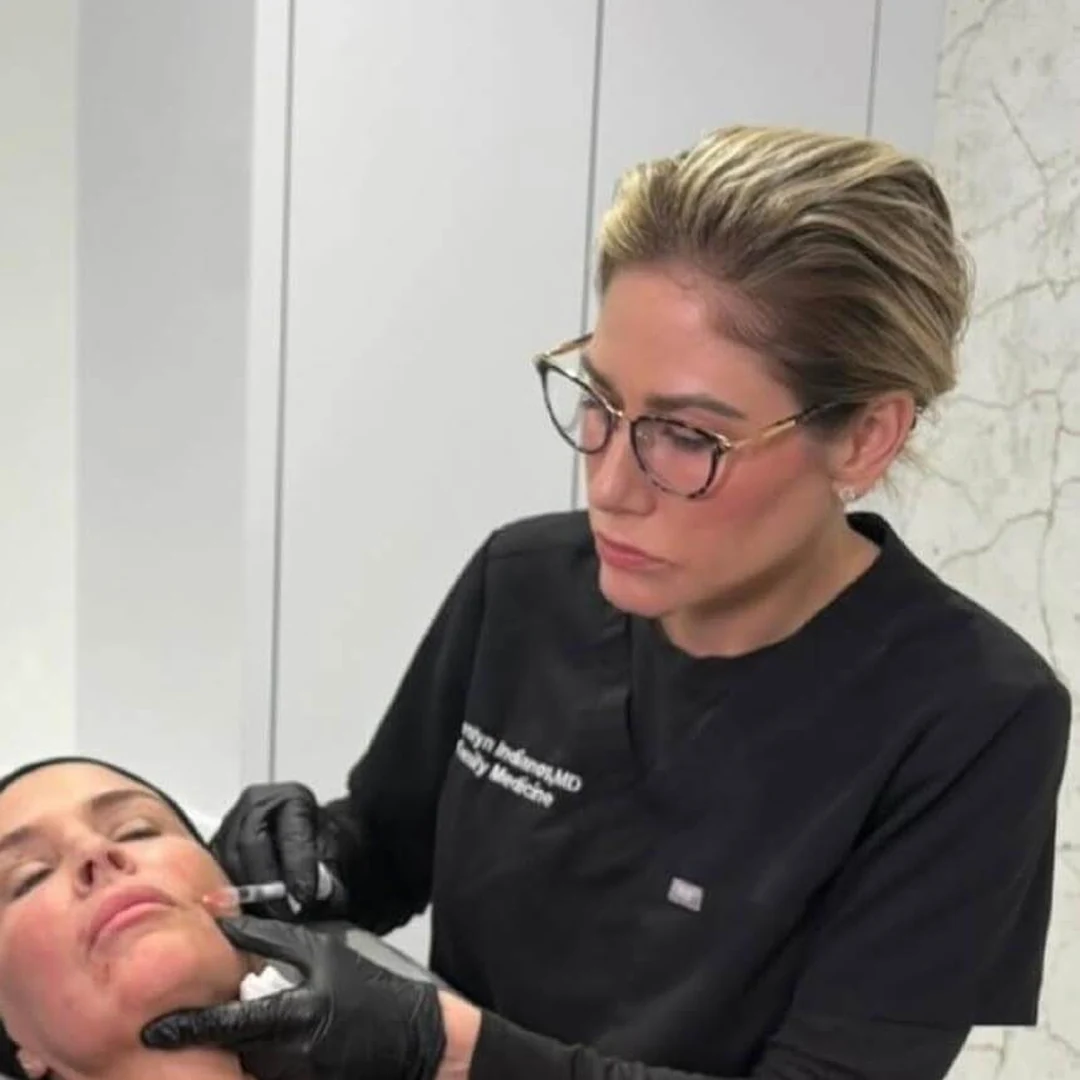
At Bespoke Aesthetics, glutathione is prescribed and supervised by Dr. Carolyn Indianos, MD, and the preparations used are compounded at state-licensed 503A pharmacies under USP 797 sterile compounding standards. Compounded medications since compounding is a pharmacy practice rather than an FDA drug-approval pathway, and a physician-led practice should tell you that before you book rather than after.

What a Glutathione Appointment Actually Involves
The first step is a health history review and screening for the contraindications above. That review is also where the physician decides whether an IM or IV route makes more sense for you, whether glutathione belongs in your plan at all, and what dose and frequency are appropriate. Dose is not something to select from a menu or copy from a forum, and any figure you read online was written for someone who is not you.
From there, an IM booster is a short visit. An IV takes longer, since the push or infusion is administered and observed. Aftercare is straightforward: hydrate well, and report anything unusual rather than waiting to mention it at the next visit. Individual response varies, and a physician-set schedule is adjusted based on how you actually respond, not on a fixed calendar.
Frequently Asked Questions
What are glutathione injections used for?
Glutathione is an antioxidant compound the body produces in every cell, and injections are used to deliver it at a concentration the digestive tract will not allow. Patients typically ask about it in the context of antioxidant support, recovery, and skin interest. Evidence quality varies considerably by use, and it is not a treatment for any medical condition. What is appropriate for a specific person is determined by a physician at consultation.
Is a glutathione injection the same as a glutathione IV?
The compound is the same. The delivery route is not. An intramuscular injection places glutathione into muscle for absorption over time in a short appointment. An IV places it directly into the bloodstream as a push or infusion, reaching a higher plasma concentration faster and allowing combination with other IV ingredients. Which one suits you is a clinical decision, not a preference to select in advance.
Do glutathione injections lighten or brighten skin?
We are not going to promise that. A 2018 dermatology review found only four published human studies at the time, all small and short, and described the single intravenous trial as having a dubious study design. The reviewers concluded that credible evidence for effectiveness was insufficient, and no injectable glutathione product is FDA-approved for skin lightening. For pigmentation concerns specifically, topical medical grade options have a stronger research base and are worth discussing first.
Are glutathione injections safe?
Under physician supervision with properly sourced compounded product, glutathione is generally well tolerated in healthy adults, with a temporary sulfur-like taste being the most commonly reported effect. Dr. Indianos confirms it is right for you at consultation. Your physician reviews allergies (including to any ingredient or preservative in the formulation, such as sulfites if present), pregnancy, breastfeeding, and active asthma before treatment, and patients in chemotherapy should consult their oncologist first. Screening before treatment is the point, not a formality.
How often would I need glutathione injections?
There is no universal schedule, and the research is not strong enough to establish one. Frequency is set by your physician based on your goals, your health history, and how you respond, then adjusted over time. Anyone quoting you a standard protocol without an exam is skipping the step that matters.
Medically reviewed by Dr. Carolyn Indianos, MD, Founder and Medical Director, Bespoke Aesthetics. Last updated October 2026.
The useful version of this conversation starts with what you are actually trying to address, not with which injection you read about. Dr. Carolyn Indianos, MD, Founder and Medical Director, will screen your history, tell you plainly whether glutathione fits your goals, and say so directly if something else is a better use of your money. Call 352-450-1004 or visit joinbespokeaesthetics.com/contact/ to book a consultation at our Gainesville clinic.