GHK-Cu sits behind a long list of claims in the skincare aisle, most of them made by people who are selling a serum rather than examining a patient. This is the physician version: what the molecule actually is, what the research describes, how the topical and compounded injectable forms genuinely differ, and who it is right for.
What to Know
- GHK-Cu is a tripeptide, glycyl-L-histidyl-L-lysine, bound to a copper ion. It occurs naturally in the body, and research describes plasma levels declining substantially with age.
- It is a signaling molecule, not a filler. It does not add volume. The research describes it influencing how skin cells behave.
- Most of what is known comes from cell, laboratory, and gene-expression research. Controlled human trials are fewer and smaller than the volume of marketing suggests.
- Topical copper peptide products are regulated as cosmetics. The FDA does not approve cosmetics before they go on sale.
- The FDA has flagged potential safety concerns for injectable routes, and human evidence for injected use is limited.
- It is not right for everyone. Active malignancy, pregnancy or breastfeeding, and known copper sensitivity are reasons we do not proceed.
What Is GHK-Cu?
GHK is a chain of three amino acids: glycine, histidine, and lysine. That short chain has a strong affinity for copper, and when it binds a copper ion the resulting complex is written GHK-Cu. Both parts matter. The peptide is the carrier, and the copper is the payload.
This is not a new synthetic invention. GHK was identified in human plasma decades ago and has been studied in wound healing and skin biology ever since. When skincare marketing says “copper peptides,” it almost always means this molecule. What that marketing usually leaves out is that the concentration, the formulation, and the route of delivery change the picture entirely.
How GHK-Cu Is Thought to Work
A useful way to hold this: GHK-Cu is described as a signal, not a structural material. It does not fill a line the way a dermal filler does. The research describes it changing what nearby cells do.
- Collagen and elastin. Cell studies describe increased synthesis of the proteins that give skin its firmness and recoil.
- Matrix breakdown. GHK is described as modulating metalloproteinases, the enzymes that dismantle the skin’s structural matrix. Supporting the build side while restraining the breakdown side is a more complete story than “boosts collagen.”
- Copper as a cofactor. Copper is required by lysyl oxidase, the enzyme that cross-links collagen and elastin into durable structure. Bound to a peptide, copper can be carried without the reactivity that free copper brings.
- Gene expression. A 2018 review in the International Journal of Molecular Sciences reported that GHK up-regulated or down-regulated a substantial share of the human genes examined in profiling analysis, with affected pathways spanning tissue repair, antioxidant defense, and inflammatory signaling. You can read it through PubMed Central, the National Library of Medicine’s archive.
Now the limitation, because it belongs in the same breath. Most of this is cell-culture and gene-profiling work. Gene expression changing in a dish is a reason to keep studying something, not proof of a result on a patient’s face. A large share of the foundational GHK research also traces back to a small number of investigators, and independent replication is thinner than the citation count implies.

Topical GHK-Cu Versus Compounded Injectable
This is the distinction most consumer content collapses, and it is the one that actually matters.
Topical serums are cosmetics. The FDA does not approve cosmetic products before they reach shelves, and a cosmetic is legally something intended to improve appearance rather than to affect the structure or function of the body. That is why serum labels talk about the look of firmness rather than about collagen synthesis. The harder question is delivery. Every topical peptide has to cross the stratum corneum, the outer barrier whose job is keeping molecules out. Concentration, formulation, and vehicle all change how much gets past it, and most retail products do not publish that data.
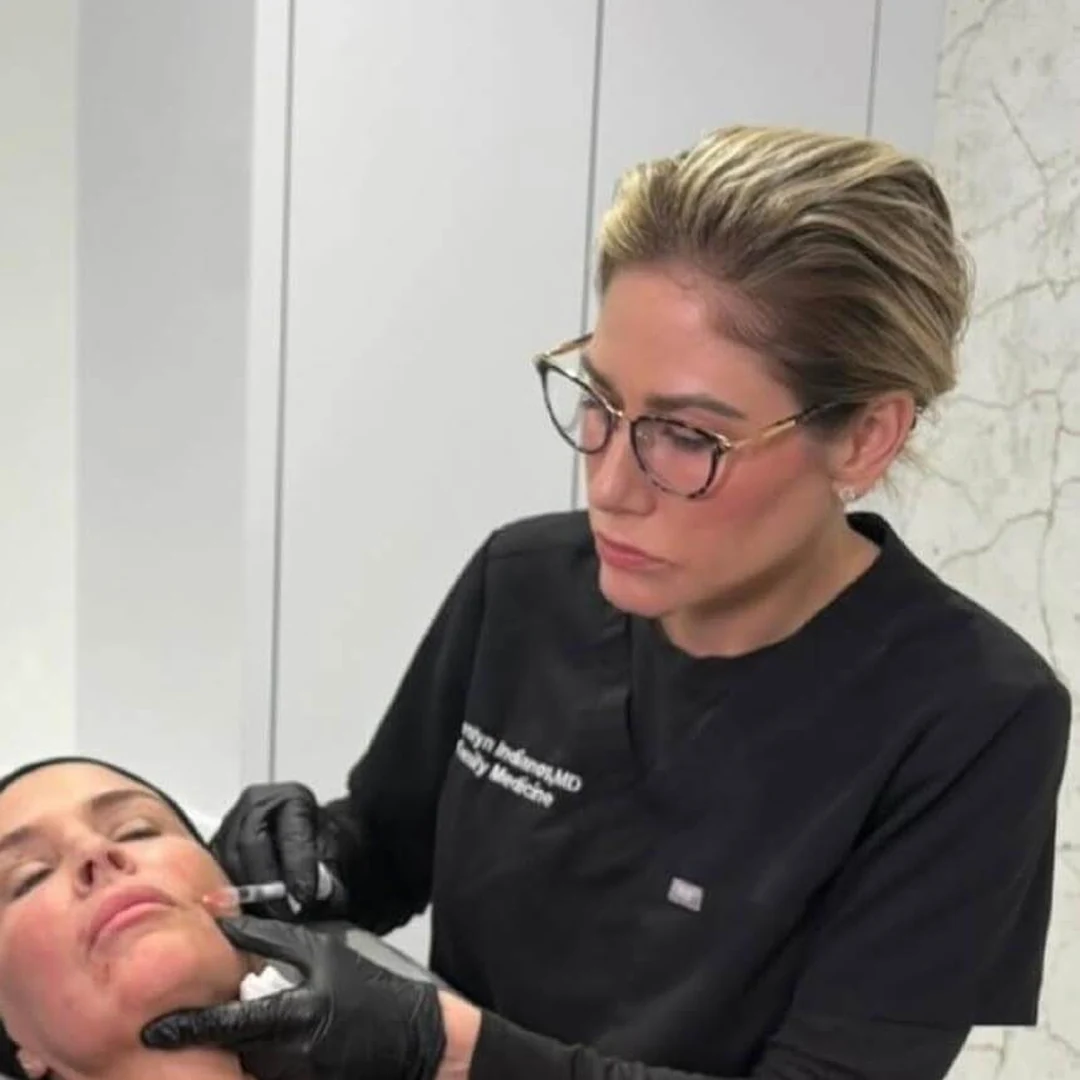
Microneedling-assisted application is one answer to the delivery problem. Controlled micro-channels give an active a route past the barrier, which is why clinics pair topical actives with the procedure rather than relying on a serum alone. There is a safety point here that consumer content almost never makes: freshly microneedled skin is an open barrier, and only sterile, appropriate preparations belong on it. A non-sterile cosmetic serum applied to skin in that state is a genuine infection and inflammatory risk, not a minor technicality. Our microneedling with PRP page covers how we handle that combination.
Compounded injectable and subcutaneous GHK-Cu is a different category again. It is not an FDA-approved medication, and the FDA has flagged potential safety concerns for injectable GHK-Cu, including a risk of immune reactions linked to aggregation and peptide-related impurities. It is prepared for an individual patient by a state-licensed 503A pharmacy operating under USP 797 sterile compounding standards, on a prescription, after an evaluation. We do not use overseas compounders. That oversight is real, and it is still not FDA approval, and no clinic should describe it as such.
| Form | How it is regulated | Main limitation | What it requires |
|---|---|---|---|
| Over-the-counter topical serum | Cosmetic. Not FDA-approved, and cosmetics are not reviewed before sale | How much crosses the skin barrier is often unpublished | Nothing, which is also why quality varies widely |
| Topical applied with microneedling | Procedure performed in a clinical setting | Only sterile, appropriate preparations are safe on an open barrier | A trained provider and a sterile product selected for the purpose |
| Compounded injectable or subcutaneous | Not FDA-approved. Prepared by a licensed 503A pharmacy on a prescription | Human trial evidence is limited relative to the marketing | Physician evaluation, screening, a prescription, and follow-up |
What Patients Come to Us For
Most people asking about GHK-Cu fall into a few groups. Some want support for skin quality: firmness, texture, the look of fine lines. Some are already having microneedling or PRP and want to know whether a copper peptide adds anything to their recovery. Some ask about the scalp, because copper peptides are heavily marketed for hair density, an area where the evidence is early and the marketing has run well ahead of it. Others are simply building a longer-term plan and want a physician to tell them which pieces are worth the money.
What we will not do is promise an outcome. Individual results vary, some patients notice little, and GHK-Cu is not a treatment or cure for any diagnosed condition. It also is not a substitute for the fundamentals. Daily sun protection, an appropriate retinoid, and an actual diagnosis for an actual skin condition come before any peptide. If a clinic sells you the peptide and skips that conversation, you are buying the wrong thing first. Our medical-grade skincare page covers where those fundamentals fit.
Who GHK-Cu Suits, and Who It Does Not
GHK-Cu tends to suit adults who want to support skin quality as part of a broader plan, patients already undergoing regenerative procedures who want their recovery supported, and people who would rather have a physician choosing the form and the source than guess from a product page.
Dr. Indianos confirms it is right for you at consultation. We do not proceed with patients who have an active malignancy, patients who are pregnant or breastfeeding, or patients with a known copper sensitivity or allergy. Copper is worth taking seriously in its own right. It is an essential trace mineral with a real upper limit, and conditions that affect how the body handles copper, including Wilson disease and significant liver disease, make this a genuine clinical question rather than a formality. If you already take a copper-containing supplement, that belongs in your history before anything is prescribed.
That screening is the point of physician oversight, alongside source control, choosing between topical, procedure-paired, and prescribed forms, and setting expectations honestly. Every protocol at our clinic starts with an evaluation by Dr. Carolyn Indianos, MD, and sometimes the recommendation is a different treatment entirely. More detail is on our GHK-Cu therapy page and our broader peptide therapy page.

Frequently Asked Questions
What is GHK-Cu?
GHK-Cu is a naturally occurring tripeptide, glycyl-L-histidyl-L-lysine, bound to a copper ion. It is the molecule behind most products marketed as copper peptides. Research describes it acting as a signal that influences skin cell behavior, including collagen and elastin synthesis and the enzymes that break the skin matrix down.
Is GHK-Cu FDA-approved?
No. Topical copper peptide products are regulated as cosmetics, and the FDA does not approve cosmetics before they go on sale. Compounded injectable GHK-Cu is not an FDA-approved medication either. The FDA has flagged potential safety concerns for injectable routes, and compounded preparations are not reviewed by the FDA for safety, effectiveness, or quality.
Does topical GHK-Cu work as well as an injectable form?
They are not equivalent, and the honest comparison has not been made in the trials that would settle it. A topical has to cross the skin barrier, and how much of it does depends on the formulation, which most retail products do not disclose. A compounded prescribed form bypasses that question but carries its own requirements: evaluation, screening, and oversight. Which form makes sense is a clinical decision, not a shopping decision.
Can GHK-Cu be used with microneedling or PRP?
It is commonly paired with both in a clinical setting, and the delivery logic is sound, since microneedling creates a route past the skin barrier. The critical caveat is sterility. Only sterile preparations appropriate for the purpose should be applied to freshly microneedled skin, which is why this pairing belongs in a clinic rather than at home.
Who is GHK-Cu right for?
We do not proceed with patients who have an active malignancy, who are pregnant or breastfeeding, or who have a known copper sensitivity or allergy. Conditions affecting copper handling, such as Wilson disease or significant liver disease, require a physician’s review first, as does any copper-containing supplement you already take.
Medically reviewed by Dr. Carolyn Indianos, MD, Founder and Medical Director, Bespoke Aesthetics. Last updated October 2026.
The useful question is not whether GHK-Cu is interesting, because it is. The useful question is whether it belongs in your plan, in which form, and ahead of or behind the things that would help your skin more. That takes an exam and an honest conversation, and sometimes the answer is that your money is better spent elsewhere. Call our Gainesville clinic at 352-450-1004 or contact us to schedule with Dr. Indianos.