
Search “BPC 157 peptide” and most of what comes back was written by someone selling it or by an anonymous forum poster describing what they injected last week. This is the physician version, which includes the parts that do not sell well: what the research shows, what compounded status really means, and where the honest answer is that nobody knows yet.
What to Know
- BPC-157 is a synthetic peptide of 15 amino acids, based on a sequence found in a protective protein in human gastric juice.
- It is not an FDA-approved drug. It has never been approved for any use, and compounded preparations are not reviewed or approved by the FDA for safety, effectiveness, or quality.
- Nearly all published research is preclinical. A 2025 systematic review in HSS Journal screened 544 articles and included 35 preclinical studies and one clinical study, all at the lowest evidence tiers. It reported that no human clinical safety data were found, which is a different statement from “it is dangerous” and from “it is safe.”
- The FDA reviewed BPC-157 among bulk substances nominated for compounding and identified significant safety risk concerns. Its regulatory status is unsettled and can change.
- BPC-157 is banned in some sports. Any athlete subject to anti-doping rules should confirm current status with their governing body first.
- We discuss BPC-157 only on an individual basis at consultation. Nothing here is an offer to prescribe it.
What Is the BPC-157 Peptide?
A peptide is a short chain of amino acids, shorter than a full protein. BPC stands for Body Protection Compound, a protein sequence identified in human gastric juice. BPC-157 is a synthetic 15-amino-acid fragment of that sequence, made in a laboratory.
That origin story is why so much of the early research looked at the gastrointestinal tract. Interest in tendon, ligament, and muscle recovery came later, mostly from animal work rather than from patients. That sequence matters, because much of the marketing implies a body of orthopedic evidence that does not exist in the form buyers assume.
How BPC-157 Is Believed to Work
Everything below comes from animal and laboratory research. These are proposed mechanisms observed in models, not confirmed effects in patients, and the distinction is not a technicality.
- New blood vessel formation. In animal models, BPC-157 has been associated with angiogenesis, the growth of small new blood vessels. A repair site with better blood supply receives more oxygen and more of what healing requires.
- Nitric oxide signaling. The peptide appears to interact with the nitric oxide system, which governs vessel dilation and local blood flow. This is one of the most cited pathways in the literature.
- Growth factor expression. Studies describe changes in growth factors and receptors involved in tissue repair.
- Fibroblast migration. Fibroblasts build collagen at a wound, and laboratory work describes faster fibroblast movement toward a repair site.
- Gut lining protection. Given where the parent compound was found, animal studies examined protection of the intestinal lining.
One limitation deserves naming plainly, because vendor content never does: a large share of the published BPC-157 literature originates from a small number of investigators, and reviewers have pointed this out. Replication across independent laboratories is how science earns confidence, and that breadth is thinner here than the citation count suggests.

What the Human Evidence Actually Shows
This is where a physician-written article has to diverge from the sales pitch. A 2025 systematic review in HSS Journal examined BPC-157 in orthopaedic sports medicine. The authors screened 544 articles and included 35 preclinical studies and one clinical study. Every included study fell into level IV or level V evidence, the lowest tiers in the standard hierarchy. The single clinical study was a retrospective look at 12 patients who received an injection for chronic knee pain.
The review’s most important line for a prospective patient is this: no clinical safety data were found. The authors also state that BPC-157 is not approved by the US Food and Drug Administration and is banned in some sports. You can read it through PubMed, the National Library of Medicine’s research database.
An absence of safety data is not evidence of harm. It is also not reassurance. It means that if a rare adverse effect exists, the studies capable of detecting it have not been done. Anyone calling this peptide “proven safe” is describing research that has not been conducted.
What Compounded Status Means Here
The word “compounded” gets used loosely, so it is worth being precise. An FDA-approved drug is one where a manufacturer submitted safety and effectiveness data for a specific use, dose, and route, made through a reviewed manufacturing process. BPC-157 has none of that.
A compounded medication is prepared by a licensed pharmacy for an individual patient on a prescription. At our clinic, compounded preparations come from state-licensed 503A pharmacies operating under USP 797 sterile compounding standards, and we do not use overseas compounders. That oversight is real, but it is not FDA approval and should never be described as such. Compounded preparations are not evaluated by the FDA for safety, effectiveness, or quality before a patient receives them.
BPC-157 carries an additional layer. The FDA evaluated it among bulk substances nominated for 503A compounding and identified significant safety risk concerns. It has not been added to the list of bulk substances cleared for that use, and its exact standing in that program has shifted over time, so the agency’s own published lists are the authority on its status on any given day. The practical consequence is that its status is unsettled and subject to change, which is why an ongoing physician relationship matters more here than a one-time purchase.
| Where it comes from | Who oversees it | FDA status | What you can actually verify |
|---|---|---|---|
| FDA-approved medication | Manufacturer under FDA review, dispensed on a prescription | Approved for a defined use | Identity, purity, sterility, labeled indication, reviewed safety data |
| Compounded by a licensed 503A pharmacy | State board of pharmacy, USP 797 standards, prescribing physician | Not FDA-approved | Licensed preparer, sterile standards, a prescription tied to one patient |
| Online research chemical vendor | No pharmacy license, no prescription, no clinician | Not a medicine, typically labeled not for human use | Nothing independently confirmed about contents, purity, or sterility |
The Questions Patients Ask Us Most
Is oral BPC-157 the same as injected? Capsules are sold widely, and the honest answer is that we lack the comparative human data to answer this. The digestive tract exists in part to break peptides down, a real obstacle for any oral peptide. Some products use a modified salt form marketed as more stable, but whether that produces meaningful absorption in people has not been established in adequate trials.
Can athletes use it? The systematic review cited above states plainly that BPC-157 is banned in some sports. Substances not approved for human therapeutic use generally fall under anti-doping rules covering non-approved substances, which are prohibited at all times. If you compete under a testing program, treat this as disqualifying until your governing body says otherwise in writing.
How long before something happens, and will it fix my injury? We do not publish a timeline, because a timeline implies a predictable result and no human trial data supports one. A painful tendon or a gut complaint deserves a diagnosis first. If the peptide conversation precedes knowing what is actually wrong, the order of operations is backwards.
Why Physician Supervision Matters
BPC-157 is prescribed only after a physician review, and it is not offered to: those with an active malignancy, those who are pregnant or breastfeeding, and those with significant underlying disease that has not been evaluated. The reasoning on active malignancy is worth stating openly. A compound studied for its effects on new blood vessel formation and cell activity raises questions in the presence of a tumor that existing research cannot answer, and when we do not know, the clinical answer is no.
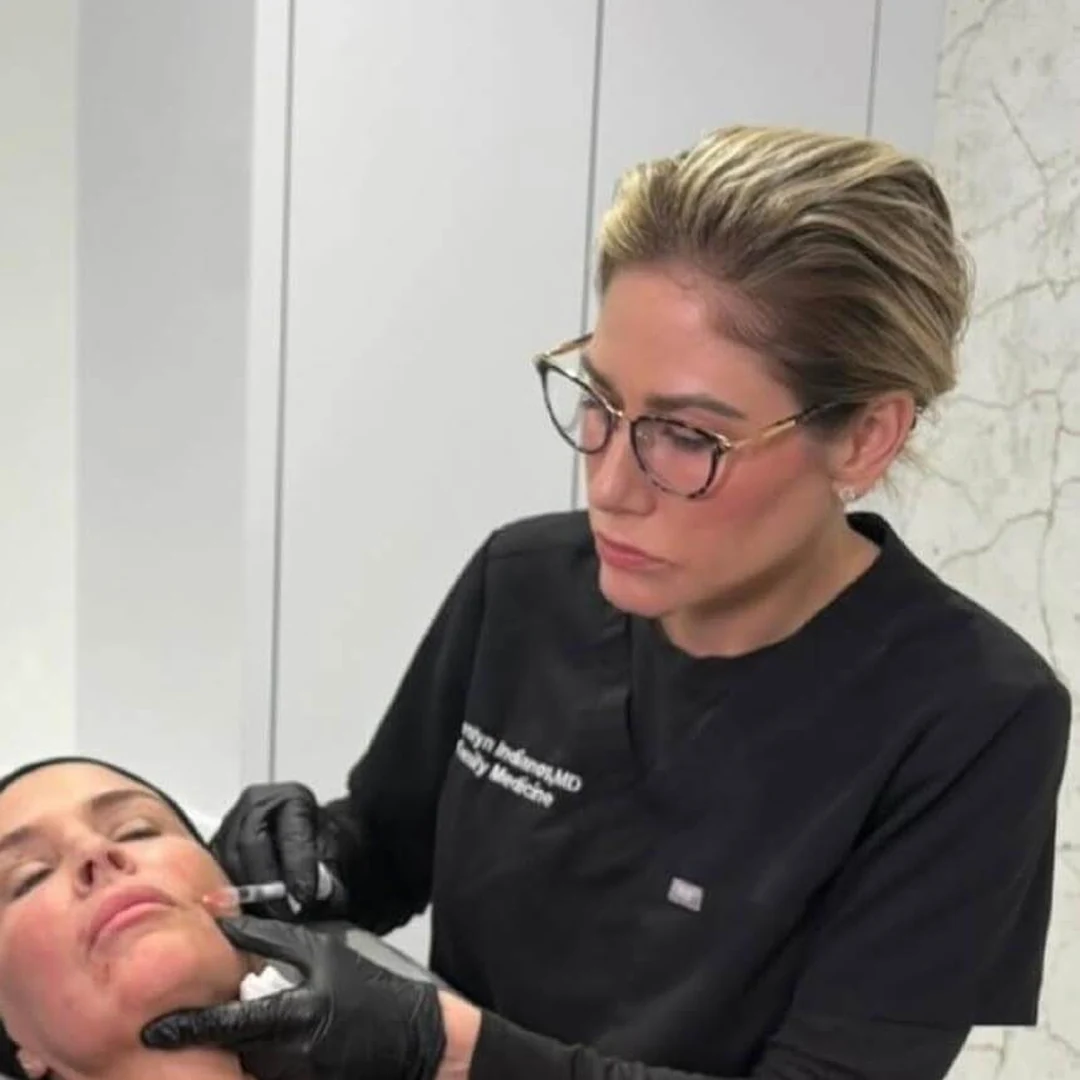
Physician supervision is not paperwork around a purchase. It is a diagnosis before a prescription, screening for the conditions above, a review of your history and medications, control over where the preparation comes from, and a clinician willing to tell you something is not right for you. Every peptide discussion at our clinic starts with an evaluation by Dr. Carolyn Indianos, MD, and it sometimes ends there. More on the program is on our peptide therapy page, and on this protocol on our BPC-157 therapy page. Some patients ask about sermorelin instead, which is also compounded and not FDA-approved, with limited evidence for adult recovery.

Frequently Asked Questions
Is the BPC-157 peptide FDA-approved?
No. It has never been approved for any use, and compounded medications are not reviewed or approved by the FDA for safety, effectiveness, or quality. The FDA also reviewed BPC-157 among bulk substances nominated for compounding and identified significant safety risk concerns.
Does BPC-157 actually work?
Human evidence is very limited. A 2025 systematic review in HSS Journal screened 544 articles and found 35 preclinical studies and one clinical study, all at the lowest evidence tiers. Animal research is not the same as demonstrated benefit in patients. Dr. Indianos reviews whether a peptide fits your goals at consultation.
Is BPC-157 legal?
BPC-157 is not a controlled substance, but it is not an approved drug either, and it has not been placed on the FDA’s list of bulk substances cleared for 503A compounding. That is why its status is unsettled and can shift as guidance evolves. Material sold by online research chemical vendors is generally labeled as not for human use. This is an unsettled area, so we address it individually at consultation.
Is oral BPC-157 as effective as an injection?
We do not know, and anyone claiming certainty is going beyond the evidence. Peptides are broken down in the digestive tract, a genuine obstacle for oral delivery. Some oral products use a modified form marketed as more stable, but adequate human data comparing oral and injected administration has not been published.
Can athletes take BPC-157?
Athletes subject to anti-doping rules should assume no until their governing body says otherwise. The published systematic review states that BPC-157 is banned in some sports, and substances not approved for human therapeutic use are generally prohibited at all times under anti-doping frameworks.
Medically reviewed by Dr. Carolyn Indianos, MD, Founder and Medical Director, Bespoke Aesthetics. Last updated October 2026.
Most people who ask us about this peptide have already read a dozen pages promising more than the research supports. What we offer instead is an evaluation: a physician who will find what is actually wrong, say where the evidence stands and where it does not, and say no when no is the right answer. Call our Gainesville clinic at 352-450-1004 or contact us to schedule with Dr. Indianos.