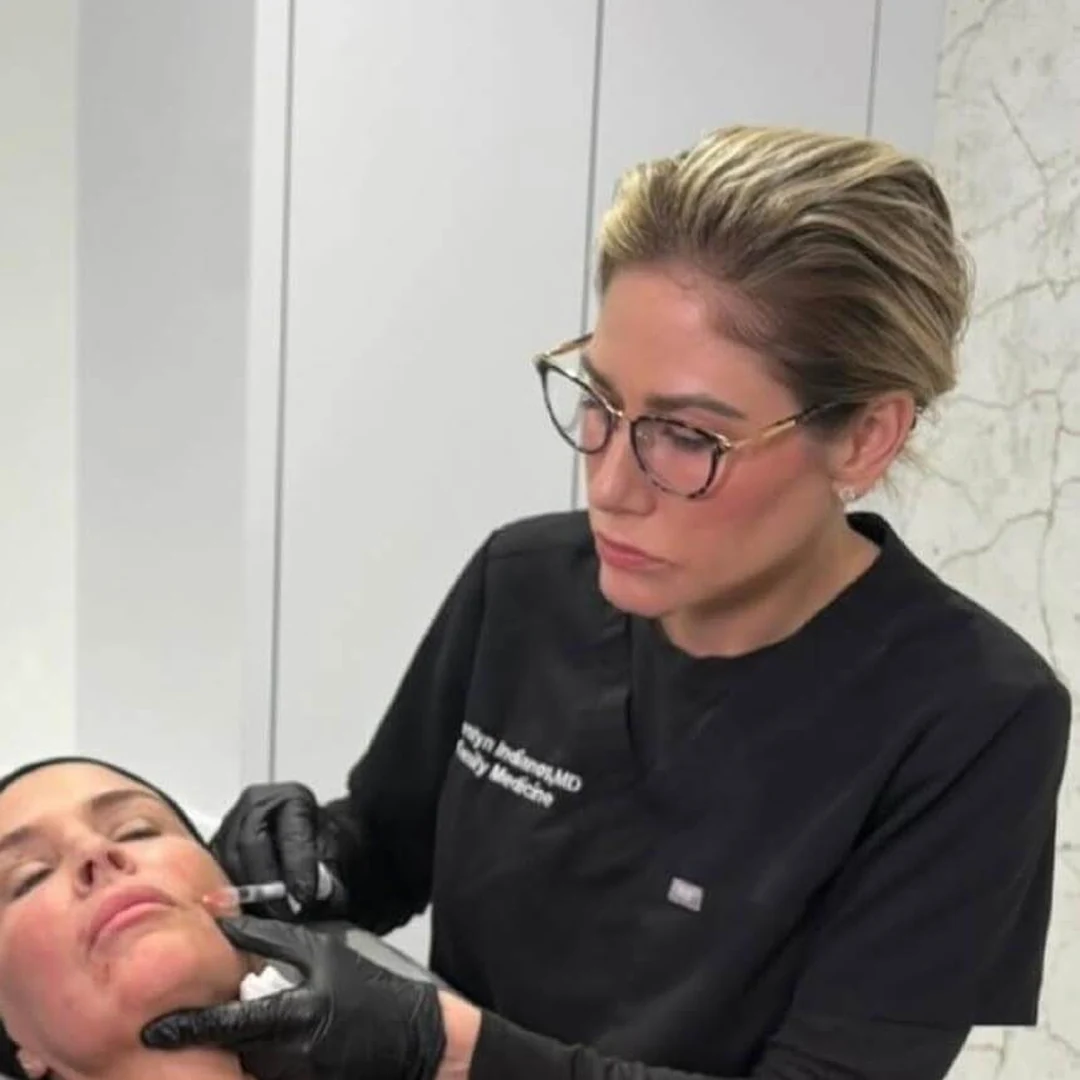

How long does Botox last is the question almost every patient asks before their first appointment, and the honest answer is a range, not a fixed number. For most people, results last three to four months, with visible softening starting within a few days and full effect settling in by around two weeks. Where a given patient falls in that range depends on the muscle treated, how the body processes the toxin, and how consistently the treatment is repeated over time. Botox is one brand of botulinum toxin type A, and the specific product used for any patient is a decision made by the treating physician based on the treatment area and the patient’s history.
This guide walks through the full timeline: how fast Botox starts working, how long it lasts once it takes effect, why it wears off in the first place, what shortens or extends results, and how repeat treatment changes the picture over time.
What to Know
- Botox typically lasts three to four months, though some patients see results fade a little sooner or last a little longer.
- Onset is not immediate. Most people notice initial changes within three to five days, with full effect visible around one to two weeks.
- Botox recovery time is short. There is minimal downtime, and most patients return to normal activity the same day.
- Duration depends on the muscle treated, metabolism, muscle strength, sun exposure, and how consistently treatment is repeated.
- Some patients report that results last a bit longer with consistent, regularly scheduled treatment.
- Rebooking before muscle movement fully returns tends to keep results looking more even over time.
How Long Does It Take Botox to Work?
Botulinum toxin does not act instantly. After injection, it needs time to bind to nerve endings and block the signal that tells the treated muscle to contract. Most patients begin to notice subtle changes within three to five days, with the effect building gradually rather than appearing all at once. Full results are typically visible by the one to two week mark, which is also when most providers recommend evaluating the outcome before considering any additional treatment.
This is a common source of confusion for first-time patients who expect an immediate, dramatic change. A face that looks unchanged on day one or two is not a sign the treatment did not work. It simply has not finished settling yet.

How Long Does Botox Last Once It Takes Effect?
Once fully settled, Botox generally lasts three to four months for most patients and most treatment areas. Some patients fall closer to two to three months, while others hold results closer to four to five months. This range reflects real biological variation rather than a difference in technique alone. The treatment area matters too: smaller, more expressive muscles like those around the eyes may show movement returning sooner than larger, stronger muscles like the forehead or the masseter, where the muscle is considerably larger and behaves differently.
Results do not disappear overnight. Muscle movement tends to return gradually, which means the transition out of full effect is usually subtle rather than sudden. Patients who track their own timeline closely often notice their own personal pattern after a treatment or two, which makes future scheduling easier to plan around.
Why Botox Wears Off
Botox works by temporarily blocking signals at the neuromuscular junction, the point where a nerve ending communicates with a muscle fiber. Blocking that signal is what relaxes the muscle and softens the movement that causes certain lines. But nerve endings are not permanently altered. Over a period of months, the nerve regenerates new signaling pathways to the muscle, and normal muscle activity gradually returns. This is a well documented mechanism of botulinum toxin type A, described in detail in the clinical literature on the drug class (StatPearls, Botulinum Toxin).
This is also why Botox is not a one-time treatment. It is a temporary, repeatable intervention rather than a permanent change to the muscle, which is part of why the internal neurotoxins page frames it as a maintenance treatment rather than a single procedure.
What Makes Botox Last Longer or Shorter
A handful of factors reliably affect where a patient falls in the three to four month range:
- Metabolism. Patients with a faster metabolism sometimes process the toxin more quickly, which can shorten how long results hold.
- Muscle strength and size. Stronger, larger muscles, such as the forehead or masseter, may show movement returning sooner than smaller muscles.
- Treatment area. Different areas of the face wear differently, which is why forehead, frown lines, and crow’s feet are best discussed separately rather than treated as one uniform timeline.
- Sun exposure and lifestyle. Frequent sun exposure and habits that increase muscle activity in the treated area may play a role in how long results appear to hold.
- Consistency of treatment. Patients who maintain a regular treatment schedule sometimes describe results lasting a little longer over time.

Does Repeat Treatment Change How Long Botox Lasts?
Many long-term patients report that their results feel more predictable, and sometimes a bit longer lasting, after several rounds of consistent treatment. One possible explanation discussed in the literature is that a muscle treated repeatedly over time may develop somewhat reduced bulk and strength, meaning there is less muscle activity to overcome as movement returns. The more reliable pattern is that consistent scheduling, rather than sporadic treatment, tends to produce more even, predictable results over time.
Botox Timeline at a Glance
| Stage | Typical Timing | What Happens |
|---|---|---|
| Onset | 3 to 5 days | Subtle softening begins as the toxin binds to nerve endings |
| Peak effect | 1 to 2 weeks | Full result is visible; the right point to evaluate outcome |
| Duration | 3 to 4 months (range 2 to 5) | Muscle relaxation holds, gradually fading as nerve signaling returns |
| Rebooking window | Around month 3 | Scheduling before movement fully returns tends to keep results more even |
| Factors that shorten it | Ongoing | Faster metabolism, stronger muscles, sun exposure, inconsistent scheduling |
Botox Recovery Time
Botox recovery time is often confused with onset: recovery refers to the minimal downtime immediately after treatment, while onset is the one to two week window described above during which the treatment settles and full results become visible.
When to Rebook Your Next Botox Appointment
Most providers recommend scheduling the next appointment around the three month mark, before muscle movement has fully returned. Waiting until results are completely gone is not harmful, but it does mean starting each round of treatment from square one rather than building on residual relaxation from the last session. Patients who prefer the most consistent, even look over time tend to book on a rolling schedule rather than waiting for lines to fully reappear. The right interval for any individual patient is best set during a consultation with your provider, who can factor in the treatment area, your personal timeline from prior sessions, and your goals.

Frequently Asked Questions
How long does Botox last on average?
Most patients see results last three to four months, though the range spans roughly two to five months depending on the treatment area, individual metabolism, and muscle strength. Results are temporary because nerve signaling to the treated muscle gradually returns over time.
How long does it take Botox to start working?
Most patients notice initial changes within three to five days, with full effect typically visible around one to two weeks after treatment. This is the point most providers recommend for evaluating results, rather than the first day or two.
Does Botox last longer the more you get it?
Some patients report results feeling more consistent, and occasionally a bit longer lasting, with regular, repeated treatment over time, though this varies by individual and is not something a provider can guarantee in advance. Consistent scheduling tends to produce more even results than sporadic treatment regardless.
What is Botox recovery time like?
There is minimal downtime. Most patients resume normal activity the same day, with only same-day precautions around exercise, alcohol, and heat. The one to two week window most people call recovery is actually the time it takes for the treatment to fully settle, not a period of limited activity.
When should I rebook my next Botox appointment?
Most providers recommend scheduling around the three month mark, before muscle movement has fully returned, which tends to keep results looking more even over time. The right interval depends on the treatment area and your personal timeline, and is best set with your provider.
Medically reviewed by Dr. Carolyn Indianos, MD, Founder and Medical Director, Bespoke Aesthetics. Last updated August 2026.
The most reliable way to know how long Botox will last for your specific goals and treatment areas is a consultation, not a general timeline. Dr. Carolyn Indianos, MD, Founder and Medical Director at Bespoke Aesthetics, evaluates your muscle activity, treatment history, and goals to set a realistic plan and a rebooking schedule that fits you. Call 352-450-1004 or visit joinbespokeaesthetics.com/contact/ to schedule, or learn more on the Botox page.