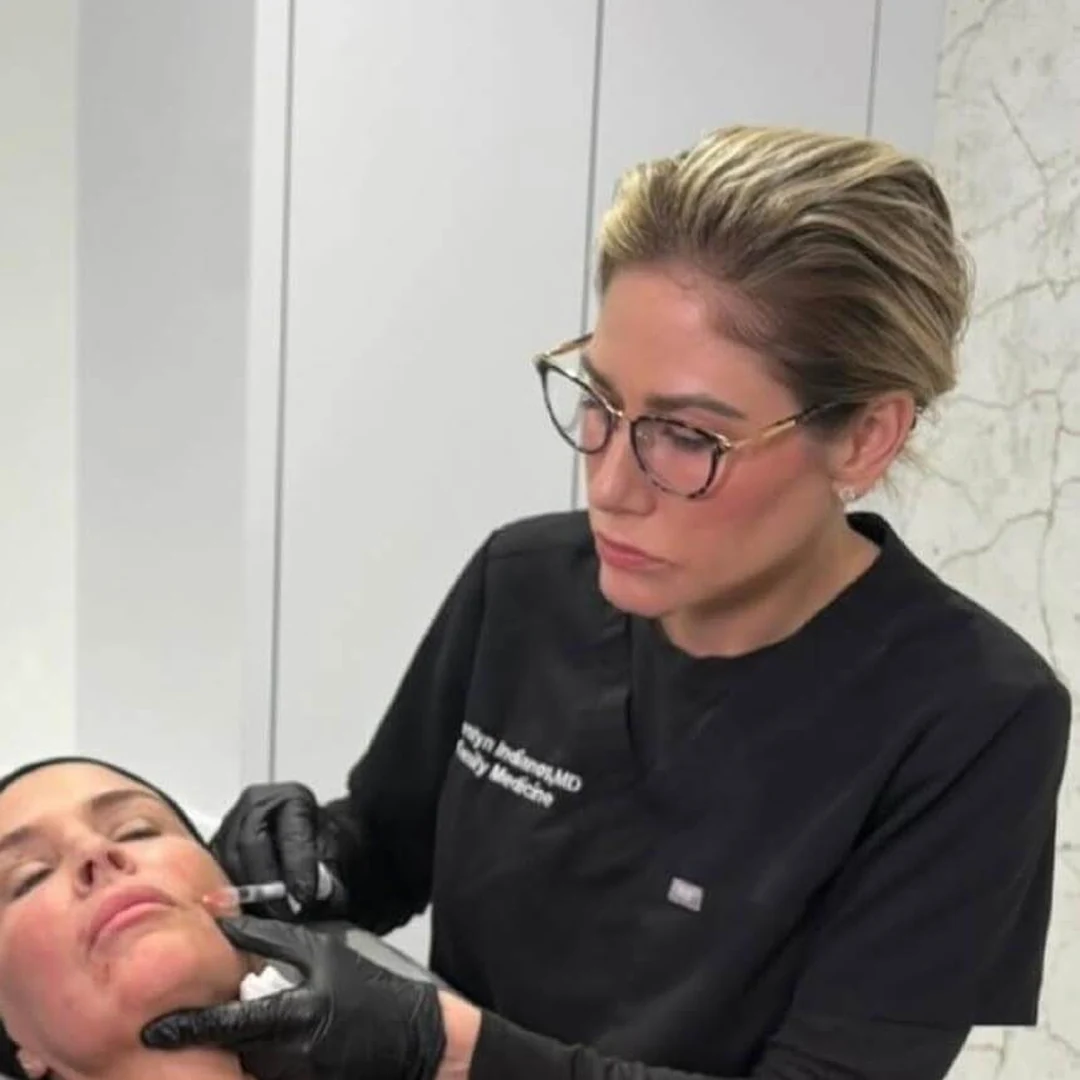

If your jaw aches when you wake up, your molars feel worn down, or the lower half of your face looks wider and squarer than it used to, masseter botox is one of the more effective non-surgical options available. It is an injection treatment that relaxes the masseter, the thick chewing muscle at the corner of the jaw, to ease clenching, grinding, and the muscle bulk that comes with chronic overuse. One thing to know upfront: this use is off-label. The FDA has not approved botulinum toxin specifically for TMJ or jaw clenching, even though the approach is well established in dental and medical practice and has been studied for years.
One note on naming before we go further. Botox is a registered trademark of Allergan for one specific botulinum toxin type A product. Several other botulinum toxin brands exist, and they are not interchangeable. Because “masseter Botox” is what patients actually search for, we use it here as most people use it, but the specific product used in your treatment is selected by your physician at consultation. Nothing here implies endorsement by or affiliation with Allergan.
What to Know
- Masseter botox relaxes the jaw muscle that drives clenching, grinding (bruxism), and TMJ-related jaw tension.
- This use is off-label. Botulinum toxin is FDA-approved for other indications, not specifically for TMJ or bruxism, though it is commonly used this way by physicians and dentists.
- Most patients notice the muscle softening within a few days, with the fuller effect visible over the following two weeks.
- Effects are temporary, generally lasting a few months. Individual response varies and repeat treatment is typically needed to maintain the effect.
- Unit counts vary by anatomy, muscle size, and symptom severity, and are determined by your physician at consultation, not by a fixed formula.
- Cost is based on units used rather than a flat fee, so pricing varies patient to patient.
What Is Masseter Botox, and Why Is It Used for TMJ and Clenching?
The masseter is the muscle you can feel flex at the back of your jaw when you bite down. In people who clench or grind, especially overnight or under stress, this muscle can become chronically overworked. Over time that can show up as jaw soreness, tension headaches, tooth wear, and, in some people, a squared or bulky jawline caused by the muscle itself enlarging (masseter hypertrophy).
Botulinum toxin type A, the neurotoxin used in Botox and other injectable neurotoxins, works by temporarily limiting the nerve signal that tells the masseter to contract. A weaker contraction means less force behind clenching and grinding, and over repeated cycles, a muscle that is not working as hard tends to shrink somewhat, which is part of why the jawline can appear softer with ongoing treatment.
This is what people mean by botox for TMJ: not a treatment for the jaw joint itself, but a way to reduce the muscular force and tension that often drives TMJ symptoms and clenching-related pain.

Botox for Jaw Clenching: What It Can and Cannot Address
Jaw clenching and TMJ discomfort can come from several sources: muscle overuse, joint inflammation, bite alignment, stress, and sleep-related grinding. Masseter botox addresses the muscular component. It does not correct joint structure, bite alignment, or the underlying cause of stress-related clenching. For many patients it is used alongside other approaches, such as a night guard, physical therapy, or stress management, rather than as a stand-alone fix. A physician consultation is where it becomes clear whether the muscular component is significant enough for this treatment to help.
How Many Units of Masseter Botox Are Used?
This is one of the most searched questions, and the honest answer is that a number quoted online is not useful to you. Unit counts for masseter treatment vary widely by muscle size, symptom severity, and treatment goals (symptom relief versus jawline softening versus both). Published ranges do exist in the clinical literature, but they are a starting reference for the physician planning your treatment, not a dose to request or self-select. Your physician determines the appropriate unit count for your anatomy at consultation, and that number may be adjusted at follow-up based on how your muscle responds.

Masseter Botox Before and After: What Changes and When
Patients generally look for two kinds of change: symptom relief (less clenching tension, fewer morning headaches, less jaw soreness) and appearance change (a softer, less square jawline as the muscle relaxes and, with repeated treatment, reduces in size). Symptom relief tends to be noticeable first, often within the first week as the muscle’s grip weakens. Visible jawline softening takes longer and is more gradual, typically becoming apparent over four to eight weeks and continuing to refine with additional treatment cycles.
We are not going to promise a specific before and after outcome here. How much change you see depends on starting muscle size, how much of the shape is muscular versus bone structure, and how consistently treatment is maintained. Anyone considering this for jawline appearance should go in expecting a gradual softening rather than a dramatic overnight change.
Masseter Botox Cost and Botox for TMJ Cost
Masseter botox is priced by units, the same way cosmetic botox is, rather than as a flat per-area fee. That means cost depends on how many units your treatment plan calls for, which in turn depends on your muscle size and goals. Because of that, an accurate cost figure is something a physician can only give you after an in-person evaluation, not a number that applies uniformly to every patient. What we can tell you is that masseter treatment, because it addresses two larger muscles rather than a small area like the forehead, typically requires more units per side than a small cosmetic area, which is a meaningful factor when budgeting for ongoing treatment. Our current per-unit pricing is published on the Botox page, so you can work out a realistic range once your physician has estimated the units your anatomy needs.
| Option | What it addresses | Onset | How long it lasts | Typical cost basis |
|---|---|---|---|---|
| Masseter botox | Muscle overactivity behind clenching, grinding, jaw soreness, and masseter bulk | Days for symptom relief, weeks for visible jawline change | Generally a few months per treatment | Priced per unit, based on individual muscle size and goals |
| Night guard | Protects teeth from grinding contact, does not reduce muscle activity | Immediate, on the night it is worn | As long as it is worn nightly | One-time cost for a custom guard, ongoing replacement over years |
| Doing nothing | No intervention | Not applicable | Symptoms and muscle bulk typically persist or slowly worsen | No direct cost, but risk of tooth wear and worsening symptoms over time |
This is an off-label use. Dr. Indianos reviews your health history and whether this treatment is right for you at your consultation.

According to the National Institute of Dental and Craniofacial Research, TMJ disorders have multiple contributing causes and treatment approaches should be individualized, which is consistent with why a muscular treatment like masseter botox is only one part of a broader evaluation for jaw pain.
Frequently Asked Questions
Is masseter botox the same as cosmetic botox?
It uses the same molecule, botulinum toxin type A, but it is injected into the masseter muscle rather than the small facial muscles used for cosmetic lines. The goal, dosing considerations, and technique differ, which is why this should be done by a physician experienced with the masseter specifically.
Is botox for TMJ FDA-approved?
No. This is an off-label use. Botulinum toxin is FDA-approved for certain cosmetic and medical indications, but not specifically for TMJ, bruxism, or jaw clenching. It is, however, a widely used and studied approach among physicians and dentists treating these symptoms.
How many units of masseter botox will I need?
There is no universal number. Unit counts depend on your muscle size, symptom severity, and goals, and are determined by your physician during an in-person consultation. Anyone quoting you a standard dose without an exam is skipping a necessary step.
How long does masseter botox last?
Effects are temporary and generally measured in months rather than years. Because response varies by individual, your physician can give you a more specific expectation based on your treatment plan and how your muscle responds over time.
Medically reviewed by Dr. Carolyn Indianos, MD, Founder and Medical Director, Bespoke Aesthetics. Last updated August 2026.
Jaw pain has several possible sources, and only some of them respond to this treatment. That is why the first step is an exam, not a booking form: Dr. Carolyn Indianos, MD, Founder and Medical Director, will tell you whether the muscular component is actually driving your symptoms, and will say so plainly if something else is. Call 352-450-1004 or visit joinbespokeaesthetics.com/contact/ to book an evaluation.