
If you have researched regenerative treatments for skin or hair, you have probably run into two terms that get used almost interchangeably: exosomes and PRP. They are not the same thing. So what are exosomes, exactly, and how is exosome therapy different from platelet-rich plasma? Below is a plain, physician-led explanation of what each treatment is and how they compare.
What to Know
- Exosomes are microscopic particles released by cells that carry proteins, growth factors, and genetic signals used in cell-to-cell communication.
- PRP (platelet-rich plasma) is made from a patient’s own blood, drawn and processed in-office. Exosome products come from a separate cell source, not from the patient’s own blood.
- Both exosomes and PRP are studied for skin quality, texture, and hair thinning, and Dr. Indianos explains where each one fits.
- Candidacy for either treatment is a physician decision made at consultation, not a self-selected choice.
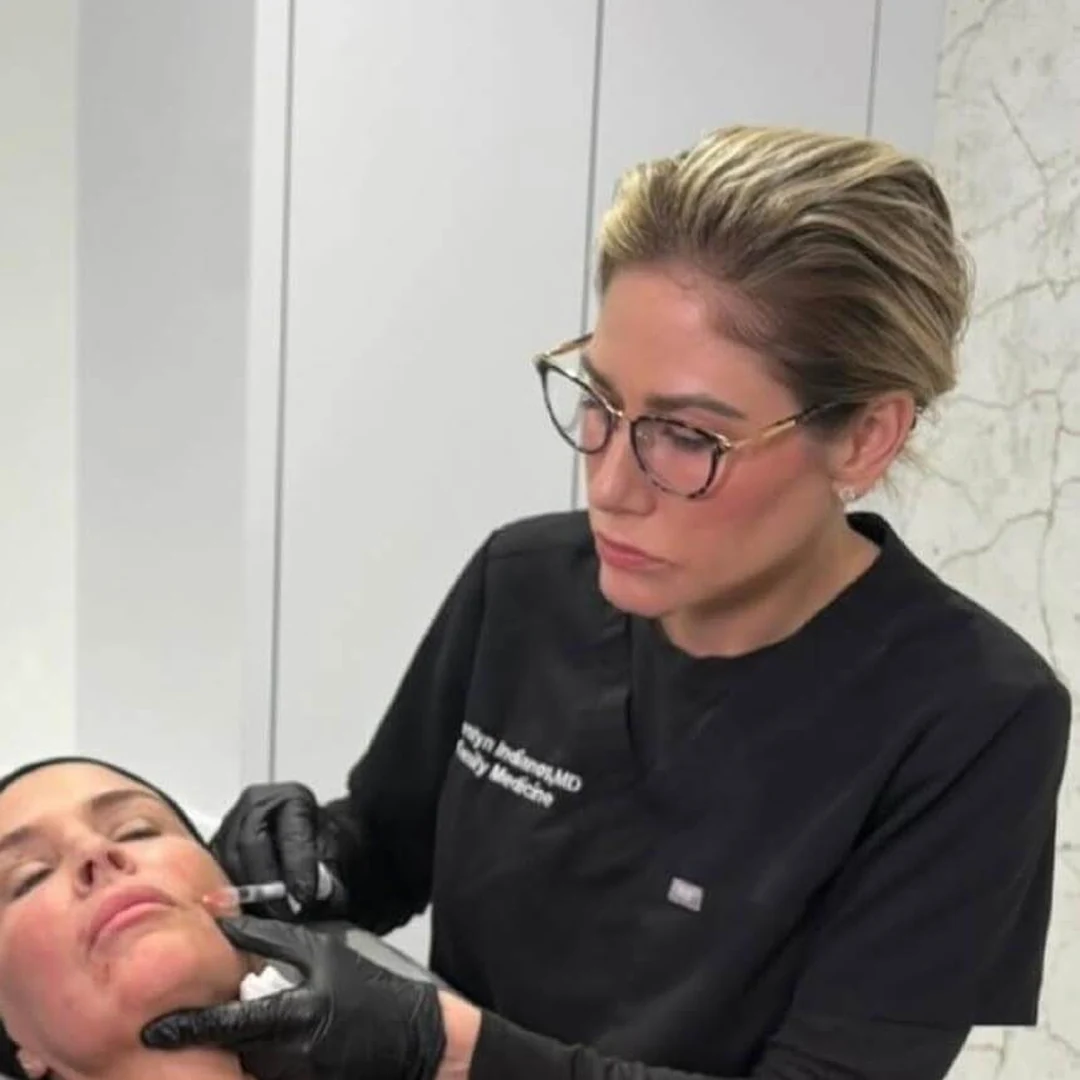
- At Bespoke Aesthetics, this work is overseen by Dr. Carolyn Indianos, MD, a physician and the practice’s Founder and Medical Director.
What Are Exosomes?
Exosomes are tiny, membrane-bound particles released by cells. Think of them as message carriers: they hold proteins, growth factors, and RNA fragments and pass that cargo between cells, which is part of how cells communicate and coordinate repair activity in the body. Exosomes are naturally occurring, but the exosomes used in aesthetic and wellness settings are lab-processed products, typically derived from a cell source separate from the patient, not extracted from the patient’s own blood or tissue during the visit.
Interest in exosomes has grown quickly because early research, much of it in the lab and in animals, suggests they may play a role in supporting the skin’s own repair signaling and in stimulating hair follicles. That research is still developing. Exosome therapy is an active area of scientific study, not an established, standardized treatment with settled long-term outcome data.
How Exosome Therapy Works
In a clinical setting, an exosome product is typically applied topically or introduced into the skin, often paired with microneedling so the product can reach a deeper layer of the skin than a surface application alone would allow. The idea behind the pairing is straightforward: microneedling creates controlled micro-channels, and the exosome product is applied during that window. What the exosomes do once introduced, and how consistently, is still being studied. No aesthetic practice can promise a specific biological result from exosome application, and any practice that does should raise a red flag.

Exosomes vs PRP: What Actually Separates Them
This is the question most patients are really asking. Exosomes and PRP get grouped together because both are regenerative-category treatments often delivered alongside microneedling, and both are discussed in the context of skin quality and hair thinning. The source and mechanism are different.
PRP is made from a patient’s own blood. A small blood draw is taken in-office, spun in a centrifuge to concentrate the platelets, and that concentrated plasma is then applied to the treatment area, usually with microneedling with PRP. Because PRP comes from the patient’s own body, it does not carry the same sourcing questions that exosome products currently do.
Exosome products are not derived from the patient in the room. They come from a separate cell source processed by a manufacturer. Neither treatment is proven superior to the other for every patient or every goal. They are different tools, evaluated differently, and human evidence on exosome products is still early and limited.

Exosomes for the Face
Most of the current interest in exosome facials centers on skin quality: texture, tone, and the overall look of tired or dull skin. An exosome facial generally pairs a topical or microneedled exosome application with the skin’s own healing response during the days that follow. Dr. Indianos reviews which option fits your skin and your goals. Human evidence for exosome facials is early and limited, so a consultation starts with that evidence rather than treating it as an off-the-shelf, one-size-fits-all service.
Exosome Hair Restoration
Exosomes are also discussed in the context of hair thinning, usually delivered via microneedling to the scalp in a manner similar to PRP hair treatments. The premise is that the growth factors and signaling molecules in the product may support the hair follicle environment. This is an area of ongoing research, and exosome hair restoration is not a guaranteed regrowth treatment and is not a treatment for any diagnosed medical hair loss condition. Anyone considering it for hair thinning should have a physician evaluate the underlying cause of the hair loss first, since not every case of thinning responds to the same intervention.
What a Session Involves
Every treatment plan starts with a consultation. A physician at Bespoke Aesthetics reviews health history, current medications, and treatment goals before recommending PRP or another approach. If PRP is selected, the visit includes a blood draw and processing time before application. If a patient asks about exosome products, the physician will discuss the product’s sourcing directly with the patient as part of informed consent. Most sessions in this category, whether facial or scalp-focused, run under an hour and are frequently paired with microneedling.

| Exosomes | PRP | |
|---|---|---|
| What it is | Lab-processed particles carrying proteins, growth factors, and genetic signals | Concentrated platelets from a patient’s own blood |
| Source | A separate cell source, not the patient’s own blood | The patient’s own blood, drawn in-office |
| What it is used for | Studied for skin quality and hair thinning support | Studied for skin quality and hair thinning support |
| Session structure | Topical or microneedled application, often paired with microneedling | Blood draw, centrifuge processing, then microneedled or injected application |
| Downtime | Minimal, similar to microneedling recovery | Minimal, similar to microneedling recovery |
Frequently Asked Questions
What are exosomes used for in aesthetics?
Exosomes are studied for their potential role in skin quality, texture, and hair thinning support, typically delivered with microneedling. Outcomes vary by patient.
Are exosomes better than PRP?
Neither is proven superior to the other. They come from different sources (exosomes from a separate cell source, PRP from the patient’s own blood) and work through different mechanisms. Human evidence on exosome products is still early and limited.
Do exosomes work for hair loss?
Exosome hair restoration is an area of active research, not a guaranteed regrowth treatment, and the cause of hair thinning should be diagnosed by a physician before any approach is recommended.
Is there downtime after an exosome facial or PRP treatment?
Both are generally low-downtime, similar to recovery after microneedling alone. Individual recovery varies, and a physician can outline what to expect based on the specific treatment and technique used.
Medically reviewed by Dr. Carolyn Indianos, MD, Founder and Medical Director, Bespoke Aesthetics. Last updated August 2026.
If you are trying to decide between exosome therapy and PRP, or want an honest answer about whether either fits your skin or hair goals, schedule a consultation with Dr. Indianos at Bespoke Aesthetics. Call 352-450-1004 or visit joinbespokeaesthetics.com/contact to get started.