
What is a med spa? The short answer is that it describes a business model, not a license or a guarantee of experience. Some med spas are built around one physician who evaluates every patient personally. Others run on a high-volume, menu-driven model where you book a treatment off a list and whoever has an opening that day handles it. Both use the same name. Neither is illegal, and plenty of med spas of every size do good, careful work. What actually matters for you as a patient is which model you are walking into, because that changes how your treatment gets planned, whether the same person sees you next time, and what happens when your plan needs adjusting six months from now.
What to Know
- “Med spa” describes a business model, not a license type or a mark of quality on its own.
- The label does not tell you whether one physician plans your care or whether you are rotating through whoever is available that day.
- A day spa and a med spa are different categories: only a med spa offers treatments such as neurotoxin, dermal filler, or medical-grade skin therapies alongside spa-style amenities.
- Two operating models are common inside the med spa and clinic category: menu-driven and high-volume, or physician-planned. Neither model is unlawful, and well-run practices exist on both ends of that range.
- Rules on medical supervision for aesthetic treatments vary by state and can change. You can verify any provider’s license directly with your state’s medical board.
- Before booking anywhere, ask who plans your treatment, whether you will see the same provider again, and how your case is tracked from one visit to the next.
What Is a Med Spa?
A med spa, short for medical spa, combines spa-style amenities with treatments that go beyond basic esthetics, most commonly injectables like neurotoxin and dermal filler, laser treatments, and medical-grade skincare. What makes it a “med spa” instead of a day spa is simply that part of the menu falls outside routine skincare. That is the whole definition. It says nothing about how experienced the person treating you is, whether the same person will see you next time, or whether anyone is evaluating your face as a whole rather than filling one order off a list.
That gap matters because “med spa” has become a catch-all label covering very different businesses. A single-room studio run by one experienced provider and a large, multi-location business with a rotating roster of injectors can both call themselves a med spa. So can a physician-owned clinic where a doctor evaluates every patient personally. The name tells you almost nothing on its own. The operating model behind it tells you almost everything, and that is what this article is actually about.
Med Spa vs Day Spa: The Difference That Actually Matters
A day spa offers services such as massage, facials, waxing, and body treatments that do not require a medical treatment plan behind them. You pick what sounds good and you get it. A med spa is different because at least part of its menu, usually injectables or laser and skin treatments, tends to work better and more safely when someone actually assesses your skin, your anatomy, and your history before deciding what to do. That assessment step, done thoroughly or done quickly, is the real dividing line worth paying attention to, more than the sign on the door or the word “medical” in the name.

Two Ways an Aesthetics Practice Can Be Built
Inside the med spa and clinic category, there are two operating models worth understanding, and most practices lean toward one or the other. This is a description of structure, not a ranking of good versus bad businesses. Plenty of well-run practices exist on both ends.
The first is menu-driven and high-volume. You choose a treatment from a list, book whichever provider has an opening, and receive that treatment. You may see a different injector at your next visit. A file exists, but nobody is necessarily reviewing your last three visits or how your face is changing as a whole before deciding what happens this time. This model serves plenty of people well and plenty of businesses run it responsibly. It is simply built for throughput first.
The second is physician-planned. One physician evaluates you, considers your full history and how your face actually moves and ages, builds a plan, and performs or directly oversees the treatment. That same physician sees you again at your next visit, so the plan from last time informs the plan for this one instead of starting from zero. Over years, that compounds: small adjustments happen because someone has been paying attention the whole time, not only because you asked for something specific off a menu.
| Operating Model | How Care Is Planned | Continuity of Provider | Depth of Initial Assessment | How Follow-Up Works |
|---|---|---|---|---|
| Day spa | Client selects from a service menu, no medical assessment involved | Not applicable, no medical file is kept | None required, since services do not call for one | Rebooking is client-initiated, with no clinical tracking |
| High-volume, menu-driven med spa | Patient selects a treatment, available provider performs it that visit | May vary visit to visit depending on scheduling | Brief intake focused on the chosen treatment | Typically initiated by the patient booking again, not proactively tracked |
| Physician-led clinic | Physician evaluates the patient and builds a plan before treatment | Same physician sees the patient across visits | Full evaluation of history, anatomy, and goals before any plan is set | Physician tracks changes over time and adjusts the plan at each visit |
What Medical Supervision Means in Practice
Rules on who can perform which aesthetic treatments, and under what kind of medical supervision, vary from state to state and can change over time. This article is not the place to sort that out, and it is not a substitute for checking directly. If licensing specifics matter to you, you can verify any provider’s license and standing with your state’s medical board. What matters more day to day, regardless of what any state sets as a legal minimum, is what actually happens at your visit: who evaluates you, who treats you, and whether that person will be there the next time you come back.

Questions to Ask Before Booking Anywhere
These apply everywhere you are considering treatment, Bespoke Aesthetics included. A good practice, whatever its model, should be able to answer all of them plainly.
- Will the same person evaluate me and treat me, or does an intake coordinator hand me off to whoever is available?
- Is a physician involved in planning my treatment, and how directly?
- Will I see the same provider at my next visit, or is that random?
- Is there a written plan or chart that carries forward from one visit to the next, or does each visit start over?
- If I need a correction or have a concern afterward, who handles it, and how quickly can I reach them?
- Is there a commission or incentive structure that could shape what gets recommended to me?
- Can I see the product being used, including manufacturer and lot, before it is injected?
None of these are accusations. They are the questions that separate a practice tracking you as a person from one tracking you as a booking. You can also review the American Academy of Dermatology’s safety guidance on cosmetic treatments, which covers questions to ask and why provider qualifications matter, before you decide.

How Bespoke Aesthetics Is Built
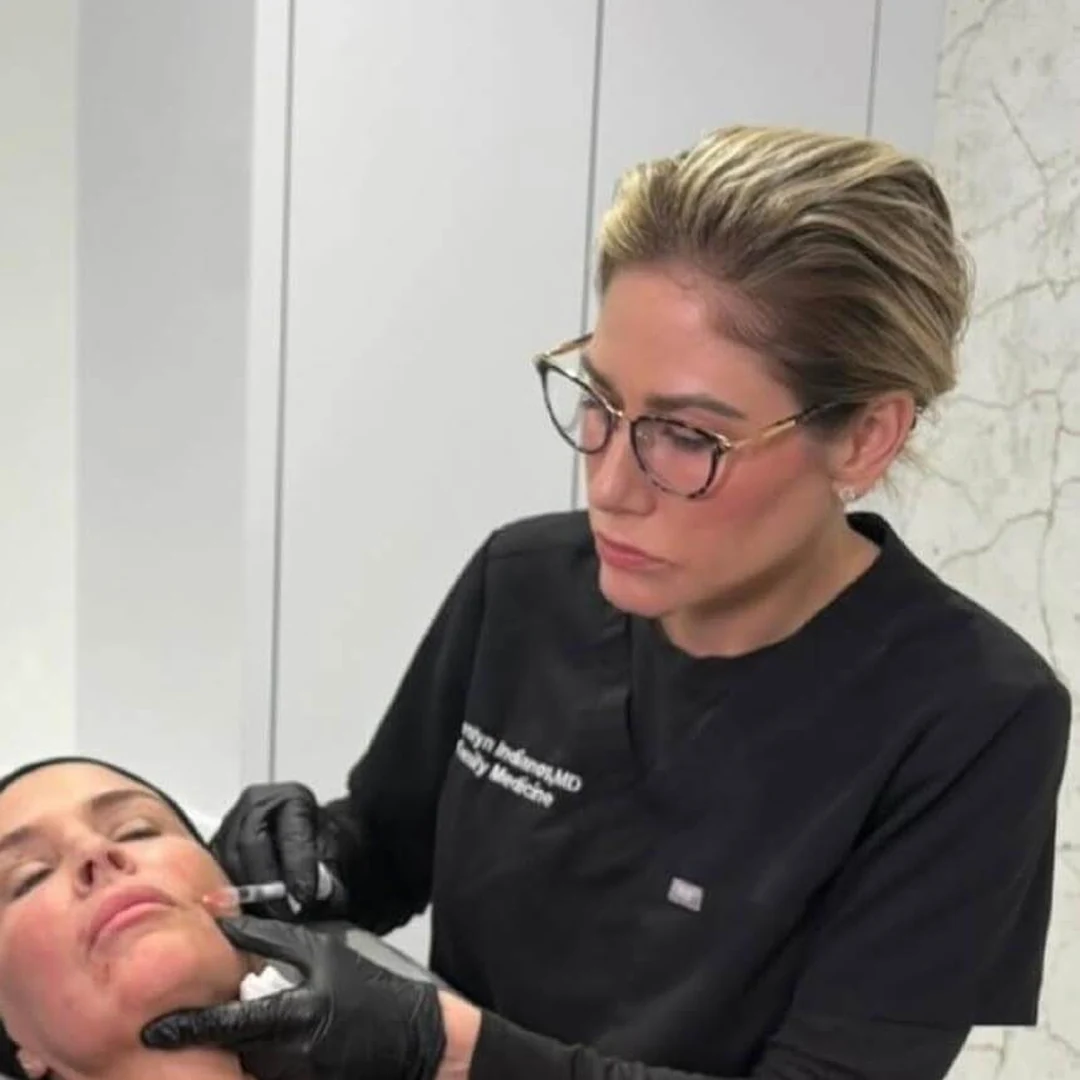
Bespoke Aesthetics is built around the physician-planned model described above. Dr. Carolyn Indianos, MD, is the founder and Medical Director, and she evaluates and plans care personally rather than routing patients through a treatment menu. Patients see her across visits, so a plan from six months ago informs the plan today instead of resetting each time. That is a structural choice about how this clinic operates, not a claim about any other practice’s quality or a suggestion that a different model does not work for other people. It is simply what to expect here, and it is worth knowing before you book, at Bespoke or anywhere else.
Frequently Asked Questions
What is a med spa, in one sentence?
A med spa is a business that offers spa-style amenities alongside treatments such as injectables, laser, or medical-grade skin therapies, built on a business model that can range from high-volume and menu-driven to physician-planned depending on the practice.
Is a med spa the same as a physician-led clinic?
Not necessarily. Some med spas operate on a menu-driven model where patients book whichever provider is available that day. Others, sometimes described as physician-led clinics, are built around one physician who evaluates, plans, and follows a patient’s care across visits. Both use similar aesthetics-industry language, so the label alone does not tell you which one you are looking at.
How do I know which model a med spa is using before I book?
Ask directly. Will the same person evaluate me and treat me, will I see that person again next time, and is a physician involved in planning my treatment. A specific, confident answer to those questions is a reasonable baseline anywhere you are considering care.
Is a physician-led clinic more expensive than a typical med spa?
Not necessarily. Pricing depends more on the specific treatment, product used, and provider experience than on a practice’s operating model. Ask any clinic for current pricing directly before you decide.
Does “medically supervised” mean the same thing everywhere?
No. The phrase gets used loosely across the industry and can describe very different levels of physician involvement. Rules on medical supervision for aesthetic treatments also vary by state, so if licensing specifics matter to you, verify them directly with your state’s medical board rather than relying on marketing language alone.
Medically reviewed by Dr. Carolyn Indianos, MD, Founder and Medical Director, Bespoke Aesthetics. Last updated October 2026.
If you want to know exactly who will evaluate you, plan your treatment, and see you again at your next visit before you book, that is an easy conversation to have. Dr. Carolyn Indianos, MD, Founder and Medical Director of Bespoke Aesthetics, plans every case personally. Call 352-450-1004 or visit joinbespokeaesthetics.com/dr-indianos/ to learn more about her background, or joinbespokeaesthetics.com/concierge/ to see how ongoing care is structured.