The most common question our clinical team hears after a patient starts a GLP-1 is not about the medication itself. It is “what am I supposed to eat now?” Knowing what to eat on semaglutide matters as much as the prescription does, because a GLP-1 slows digestion and blunts appetite, and if your meals do not adjust, nausea, fatigue, and muscle loss can follow, and some patients quit. This guide covers the food side of GLP-1 therapy: protein, fiber, hydration, the foods that tend to cause trouble, and how to structure a day of eating when your appetite is very low. Compounded semaglutide and tirzepatide are not FDA-approved.
What to Know
- GLP-1 medications (semaglutide and tirzepatide) slow gastric emptying, which is one reason smaller, less rich meals are usually more comfortable than three large ones.
- Protein is the single highest-priority nutrient on a GLP-1 diet plan, since appetite suppression combined with rapid weight loss raises the risk of losing lean muscle along with fat.
- Fiber and fluids both need deliberate attention. Appetite loss quietly reduces both, and low intake of either is a common driver of constipation on these medications.
- Greasy, fried, very sweet, and very rich foods are the most frequent triggers for nausea because they sit longer in a stomach that is already emptying more slowly.
- Alcohol tends to hit harder and settle worse on a GLP-1 and offers no nutritional value while appetite is limited.
- Nutrition targets on a GLP-1 are individualized. Nothing in this article is a prescribed meal plan, and specific protein, calorie, or macro goals should be set with your clinical team.
Protein First: Why It Is the Priority
Protein intake on a GLP-1 deserves top billing for a simple reason: the medication does not know the difference between fat and muscle. Rapid weight loss without enough protein and without resistance activity tends to pull from both, and lean muscle is metabolically expensive to rebuild. Because appetite is often noticeably reduced on these medications, patients frequently eat less overall and, without planning, end up eating disproportionately less protein too, since it is easy to fill a smaller appetite with whatever is easiest to get down.
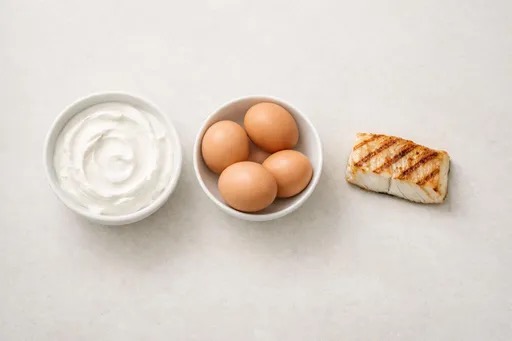
The practical fix is to treat protein as the first decision at every meal, not the last. Lean poultry, fish, eggs, Greek yogurt, cottage cheese, tofu, and protein shakes all deliver protein in a smaller volume than a large portion of meat, which matters when your stomach fills up fast. A commonly cited starting reference in the clinical nutrition literature is roughly 0.6 to 0.8 grams of protein per pound of goal body weight per day, though specific targets vary by body composition, activity level, kidney function, and treatment goals. Treat that as an anchor for the conversation, not a prescription, and confirm your own number with your clinical team. For a deeper look at protecting muscle mass while losing weight on a GLP-1, see our guide to maintaining muscle during weight loss.
This is also where we differ from a refill-only service. A prescription with no nutrition plan attached is how patients end up losing weight and muscle at the same time, feeling worse at month four than month one, and quitting. Protein targets, and whether you are hitting them, are part of what gets reviewed at follow-up here, not left to the patient to figure out alone.
Fiber and Hydration: The Two Basics That Get Skipped
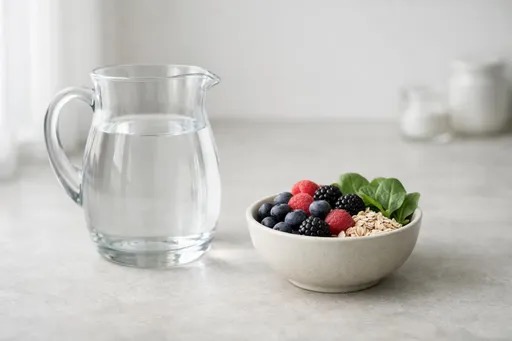
Fiber and water are unglamorous, and they are also the two things most likely to quietly slide when appetite drops. Slower gastric emptying plus lower fluid and fiber intake is a common recipe for constipation on semaglutide and tirzepatide. Vegetables, fruit with the skin on, beans, lentils, chia and flax, and whole grains all help, but they should be added gradually. A stomach that is already digesting more slowly does not always tolerate a sudden jump in fiber well, so build it up over one to two weeks rather than overnight.
Hydration needs similar attention because thirst cues can fade along with hunger cues. Sipping water steadily through the day, rather than trying to drink a large volume in one sitting, tends to be more comfortable and is easier to actually sustain. Electrolytes matter too, particularly if intake overall is lower than usual.
Foods That Commonly Worsen Nausea
Nausea is the most reported side effect of GLP-1 therapy, and food choice plays a real role in how it shows up day to day. Foods that tend to make it worse share a pattern: they are fatty, fried, very sweet, heavily processed, or simply large in volume, and all of those slow digestion down further in a stomach that is already emptying more slowly than usual.
- Fried foods and anything heavy in oil or butter
- Large or rich meals, especially fast food or buffet-style eating
- Very sugary foods and drinks, including regular soda and pastries
- Carbonated beverages, which can add bloating on top of nausea
- Spicy foods, for some patients (this one varies person to person)
Eating slowly, stopping at the first sign of fullness rather than pushing through it, and choosing smaller and more frequent meals over three large ones all tend to reduce nausea in practice. If nausea is persistent or severe, contact your clinical team promptly rather than managing it through food choices alone. Severe or persistent belly pain (with or without vomiting, sometimes spreading to the back), repeated vomiting, or signs of dehydration such as dizziness or very little urine need prompt medical evaluation, and emergency care when severe.
What About Alcohol
Alcohol on a GLP-1 is worth a direct answer: most patients tolerate it less comfortably than before starting treatment. It can worsen nausea, adds calories without nutrition at a time when every calorie in a reduced appetite counts, and, because GLP-1 medications already slow digestion, some patients report that alcohol’s effects feel stronger and last longer than expected. If you choose to drink, smaller amounts, less often, and never on an empty stomach are the more comfortable approach for most people. If you are on a GLP-1 alongside other medications, ask your clinical team about alcohol specifically rather than assuming your prior tolerance still applies.
How to Eat When Your Appetite Is Very Low
Appetite suppression is the mechanism GLP-1 medications are built on, but very low appetite creates its own problem: it becomes easy to under-eat protein, fiber, and overall calories to a degree that is not the goal. When appetite is minimal, a few adjustments tend to help.
- Eat on a schedule rather than waiting for hunger, since hunger cues may not show up reliably.
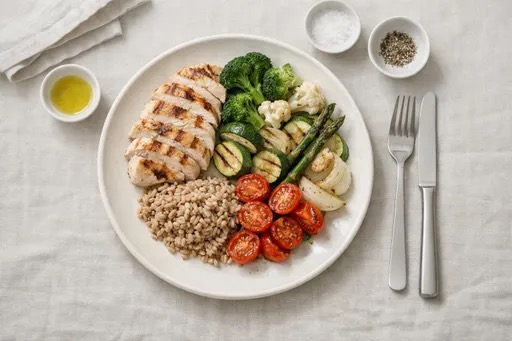
- Prioritize protein first on the plate while volume is limited, then round out with vegetables and a smaller portion of starch.
- Choose nutrient-dense foods over empty calories. A small amount of food needs to do more work.
- Keep easy, high-protein options on hand (yogurt, hard-boiled eggs, a protein shake) for days when even a full meal feels like too much.
- Tell your clinical team if you are consistently unable to eat enough to feel steady. This is common early on and is manageable, but it should be discussed rather than pushed through alone.
A Sample Day of Eating (Illustration, Not a Prescription)
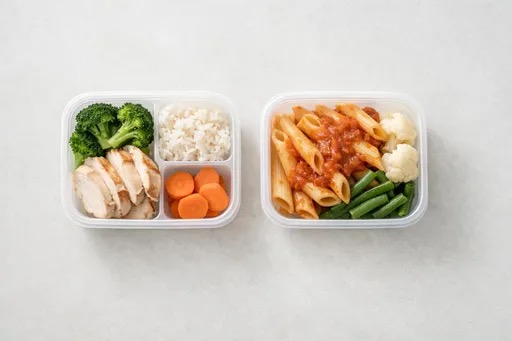
The framework below is offered as one example of how the principles above come together across a day. It is not a meal plan prescribed for any individual patient, and calorie or protein needs vary by person, so use it as a structure to adapt, not a target to hit exactly.
- Morning: Greek yogurt with berries, or eggs with a small piece of fruit
- Midday: A palm-sized portion of lean protein (chicken, fish, or tofu) with a cup of vegetables and a small serving of a whole grain
- Afternoon: A protein-forward snack if appetite allows, such as cottage cheese or a handful of nuts
- Evening: A smaller version of the midday pattern: protein, vegetables, minimal fried or heavy elements
- Throughout the day: Steady water intake, spread out rather than concentrated
This is a starting frame, not a fixed rule. Individual results and tolerance vary, and your clinical team can help adjust portions, timing, and specific foods to what works for your body and your treatment plan.
| Foods that tend to work well | Foods that commonly cause trouble | Why |
|---|---|---|
| Grilled or baked lean protein (chicken, fish, tofu) | Fried chicken, fried fish, breaded proteins | Fat and breading slow digestion further and sit longer in a stomach already emptying more slowly. |
| Plain Greek yogurt or cottage cheese | Ice cream, milkshakes, sweetened dairy drinks | High sugar and fat content together are a common nausea trigger. |
| Steamed or roasted vegetables | Large raw salads eaten too quickly | Volume and speed of eating matter as much as the food itself when capacity is reduced. |
| Water, herbal tea, electrolyte drinks | Soda and other carbonated beverages | Carbonation adds bloating on top of an already sensitive stomach. |
| Small, frequent protein-forward meals | One or two large meals a day | Large volumes are harder to tolerate and more likely to trigger nausea or reflux. |
| Beans, lentils, whole grains added gradually | A sudden jump to a high-fiber diet | Fiber helps prevent constipation but needs a slow ramp-up to avoid bloating and discomfort. |
For background on how GLP-1 receptor agonists affect appetite and gastric emptying, see this peer-reviewed review on GLP-1 receptor agonist mechanisms and weight management.
Frequently Asked Questions
What should I eat first when I am on semaglutide?
Most clinical teams recommend prioritizing protein at every meal, since appetite suppression makes it easy to under-eat protein without noticing. Vegetables and a smaller portion of whole grains or starch typically round out the plate.
Why does semaglutide make certain foods harder to tolerate?
Semaglutide and tirzepatide both slow gastric emptying, meaning food stays in the stomach longer than usual. Fried, fatty, very sweet, or large-volume meals sit there even longer, which is why they are the foods most commonly linked to nausea.
How much protein do I need on a GLP-1 diet plan?
A commonly cited starting reference is roughly 0.6 to 0.8 grams per pound of goal body weight per day. That is an anchor, not a prescription: actual needs vary by body composition, activity level, and kidney function, and our clinical team sets your individual target as part of your treatment plan.
Can I drink alcohol while taking semaglutide or tirzepatide?
Many patients find alcohol harder to tolerate on a GLP-1, and it adds calories without nutrition at a time when appetite and intake are both reduced. If you choose to drink, smaller amounts and never on an empty stomach are generally more comfortable, and it is worth discussing with your clinical team directly.
What if I cannot eat enough on a GLP-1?
Very low appetite is common, especially early in treatment, and it is manageable with the right adjustments: eating on a schedule, prioritizing nutrient-dense and protein-forward foods, and keeping easy options on hand. If you are consistently struggling to eat enough, tell your clinical team so your plan can be adjusted.
Medically reviewed by Dr. Carolyn Indianos, MD, Founder and Medical Director, Bespoke Aesthetics. Last updated September 2026.
If you are already on a GLP-1 somewhere else and nobody has talked to you about what to eat, that gap is the reason a lot of people stall or quit. Dr. Carolyn Indianos and the clinical team build the nutrition side into the protocol itself as part of our medically supervised weight loss program, whether you started with us or are transferring care. Call 352-450-1004 or visit joinbespokeaesthetics.com/contact/.