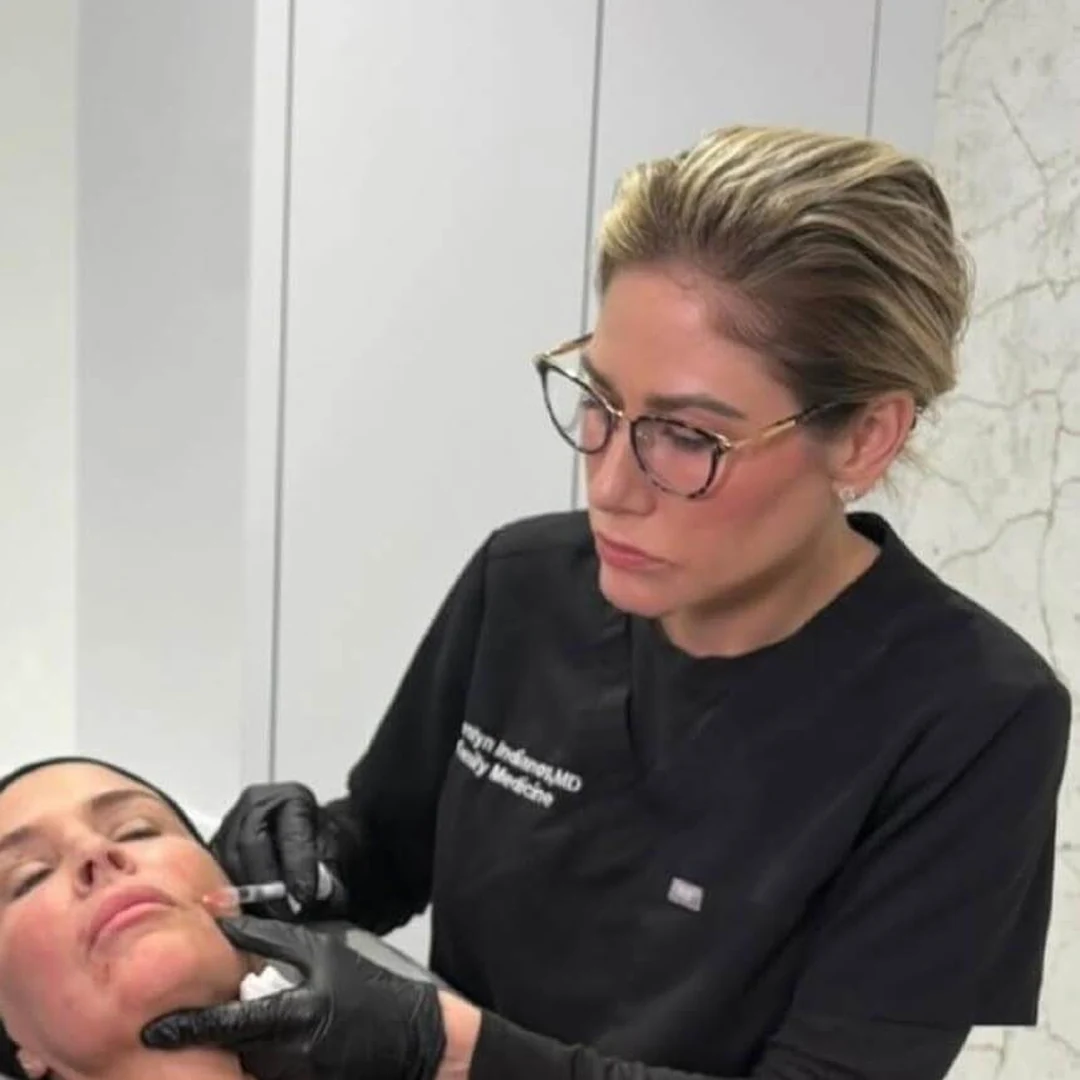
Filler migration is one of the most searched terms in aesthetics, and also one of the most misunderstood. Some of what gets called migration is actually normal post-injection swelling. Some of it is overfilling in the original spot rather than product traveling elsewhere. True migration, where hyaluronic acid gel moves beyond the area it was placed, does happen, but it is discussed far more often online than it is precisely defined or measured in the clinical literature. This post explains what migration actually is, what tends to cause it, how a physician evaluates it, and how hyaluronidase is used to dissolve filler when dissolving is the right call.
What to Know
- Filler migration means hyaluronic acid gel has moved from where it was originally placed to an adjacent area, not simply that an area looks fuller than expected.
- Much of what patients call “migration” is actually normal swelling in the first one to two weeks, or filler that was placed correctly but in a larger volume than the face can carry well.
- The lips and under-eye area are the two zones most discussed in connection with migration, largely because the tissue there is thin and mobile.
- Hyaluronidase is a prescription enzyme that breaks down hyaluronic acid filler. It is administered by a clinician and is not a home or DIY treatment.
- The single most important safety topic in this space is not migration, it is vascular occlusion: sudden severe pain, skin blanching, or mottled discoloration after filler is a medical emergency.
What Filler Migration Actually Is
Migration, in the strict sense, is hyaluronic acid gel that has shifted away from the site where it was injected and settled somewhere it was not intended to sit. This is different from a treated area simply looking fuller than a patient expected, and different from swelling that has not yet resolved. True migration can happen with hyaluronic acid fillers because the product is a soft gel, not a solid implant, and gel can move with repeated muscle movement, massage, pressure, or, less commonly, injection technique that places product too superficially or too close to a mobile tissue plane.
It is worth being direct about the evidence here: migration is a term used heavily in patient forums and social media, but it is not always rigorously distinguished from overfilling or delayed swelling in the way it is described online. Rigorous quantification of true migration rates, versus other complications that get labeled the same way, is limited in the published literature. That does not mean migration is not real. It means the term gets applied loosely, and a proper in-person evaluation is what separates true migration from something else that looks similar.
Migration vs. Swelling vs. Overfilling
| Issue | What It Looks Like | Typical Timing | What Is Done About It |
|---|---|---|---|
| Normal swelling | Puffiness or fullness in and around the injection site, sometimes mild asymmetry | Peaks in the first 24 to 72 hours, resolves over 1 to 2 weeks | Usually nothing. Time, cold compress as advised, and follow-up if it has not settled by two weeks |
| Overfilling | The treated area looks larger or more prominent than intended, but stays in the original location | Present at the outcome visit, does not shift position over time | Reviewed by the injector. Can sometimes be softened with hyaluronidase or allowed to settle as the product metabolizes |
| True migration | Gel is found in a location distinct from where it was placed, for example above the lip border or along the tear trough rim | Can appear weeks to months after treatment, sometimes worsens with repeated massage or muscle movement | Clinical evaluation by a physician, hyaluronidase if dissolving is indicated |
Where Migration Is Most Discussed
The two areas that come up most often in this conversation are the lips and the under-eye (tear trough) region. Both are treated in detail on our lip filler page, so we will not re-cover lip filler technique or longevity here. What is relevant to migration specifically is that both zones share two traits: thin, mobile tissue, and constant repetitive movement (talking, chewing, blinking, smiling). That combination is part of why these two areas generate the most migration-related questions, even though most patients treated conservatively in these zones do not experience it.
What Causes Migration
A few factors come up repeatedly when migration is discussed clinically:
- Injection depth and plane. Product placed too superficially, or in a plane with more mobility, has more room to shift than product placed in the intended tissue layer.
- Volume relative to the tissue. Larger volumes placed in a single area, or placed faster than the tissue can accommodate, are more likely to spread beyond the intended zone.
- Product selection. Different hyaluronic acid formulations have different viscosity and cohesivity. A softer, more mobile gel behaves differently in thin tissue than a firmer one.
- Repeated pressure or massage. Habitual touching, sleeping face-down, or vigorous massage in the weeks after treatment can encourage gel to move.
- Layering over time. Filler added on top of filler in the same area, treatment after treatment without full reabsorption of the prior volume, can gradually change how product behaves in that tissue.
None of this means migration is inevitable, or that filler is inherently unpredictable. It means the risk is manageable, and management starts before the injection, with judgment about product, volume, and technique.

How Hyaluronidase Dissolves Filler
Hyaluronidase is a prescription enzyme that breaks down hyaluronic acid, the same substance hyaluronic acid fillers are made from. Using it to dissolve filler is an off-label use. When a physician determines that dissolving is appropriate, whether because of true migration, overfilling, asymmetry, or a vascular complication, hyaluronidase is injected directly into the affected tissue. The enzyme breaks the gel down so the body can clear it. Effects typically begin within hours and continue over the following day or two, and more than one session is sometimes needed. How much is needed and how the area responds is individual and is a clinical decision made in person, not something to plan or estimate at home.
This is a prescription medical treatment administered by a clinician, not a cosmetic step a patient can perform or request as a routine touch-up. It carries its own considerations, including the possibility of an allergic reaction and the fact that response varies by product and area, more than one session may be needed, and dissolving cannot guarantee a return to exactly how the area looked before. Anyone considering dissolving filler, for migration or any other reason, should be evaluated in person before any decision is made about whether hyaluronidase is appropriate.

Reducing the Risk: Injector Choice and Conservative Dosing Philosophy
The most effective way to reduce migration risk is decided before the needle is ever used. A few principles guide how we approach dermal filler at our practice:
- Injector training and anatomy knowledge. A physician-led approach means the person planning your treatment has the anatomical training to choose the correct depth and plane for the area being treated, and to recognize early warning signs if something looks off.
- Conservative volume. Building gradually across sessions rather than placing a large volume in one visit gives the tissue time to settle and gives the injector a chance to assess the result before adding more.
- Product matched to the area. Different zones of the face call for different filler characteristics. Using a product suited to the tissue it is going into, rather than one product everywhere, is part of a conservative approach.
- Honest consultation. Part of reducing risk is being willing to say a particular volume or area is not a good fit for a given patient’s anatomy, rather than proceeding because it was requested.
You can review our general approach to dermal filler, including how we think about product selection and treatment planning, on our dermal filler page.
When to Seek Urgent Care
This is the most important section in this article. Most filler-related concerns, including most true migration, are not emergencies and can wait for a scheduled follow-up. Vascular occlusion is different and requires urgent attention. Vascular occlusion happens when filler is inadvertently injected into or compresses a blood vessel, cutting off blood flow to the surrounding tissue. Left untreated, it can cause tissue damage, so recognizing it quickly matters. Vascular occlusion and other complications from hyaluronic acid fillers are reviewed in the Global Aesthetics Consensus on complications from hyaluronic acid fillers.
Seek urgent medical evaluation, from the treating provider or, if unavailable, an emergency room, if you notice any of the following after a filler treatment:
- Sudden, severe pain that is out of proportion to the injection itself
- Skin that turns unusually pale or white (blanching) in or near the treated area
- Mottled, purplish, or dusky skin discoloration
- Vision changes, including blurring or loss of vision, which can indicate the occlusion has affected blood flow near the eye. This is an emergency: call 911 or go to the nearest emergency room right away.
These signs can appear during the injection or in the hours afterward. Do not wait to see if they improve on their own. Individual presentations vary, and only an in-person evaluation can determine what is happening and what treatment, which may include urgent hyaluronidase, is needed.
Frequently Asked Questions
Is filler migration common?
True migration, where gel has moved beyond its original injection site, is not the most common filler complication. Swelling and overfilling are more frequently what patients are describing when they use the word “migration.” The published literature has not established a precise, agreed-upon rate for true migration, which is part of why the term is used inconsistently online.
How do I know if it is migration or just swelling?
Timing is the main clue. Swelling typically peaks in the first few days and resolves within one to two weeks. If an area still looks different from what was intended after that window, or if you notice product in a location distinct from where it was injected, an in-person evaluation with your injector is the next step.
Can migrated filler be fixed?
Often, yes. Hyaluronidase can often dissolve hyaluronic acid filler, including filler that has migrated, though it may take more than one session and cannot guarantee an exact return to your prior appearance. Once dissolved, the area can be reassessed and, if desired, retreated. This is a clinical decision made after an in-person exam, not something to self-diagnose or address without a provider.
Does dissolving filler hurt or have side effects?
Hyaluronidase is injected similarly to filler itself, so patients typically experience the same type of temporary discomfort, swelling, or bruising as an injection appointment. As with any injectable, allergic reaction is possible, which is one reason it is administered and monitored by a clinician rather than performed as a self-directed treatment.
How can I lower my risk of migration before I get filler?
Choose a physician-led practice with anatomical training, ask how volume will be approached for your specific area, and favor a conservative, staged approach over a single large-volume session. Being clear with your injector about your goals, and trusting their judgment when they recommend less rather than more, is part of reducing risk.
Medically reviewed by Dr. Carolyn Indianos, MD, Founder and Medical Director, Bespoke Aesthetics. Last updated September 2026.
If you have questions about a previous filler treatment, or you are considering dermal filler and want a conservative, physician-led consultation, call Bespoke Aesthetics at 352-450-1004 to schedule with Dr. Carolyn Indianos, MD, in Gainesville, FL.